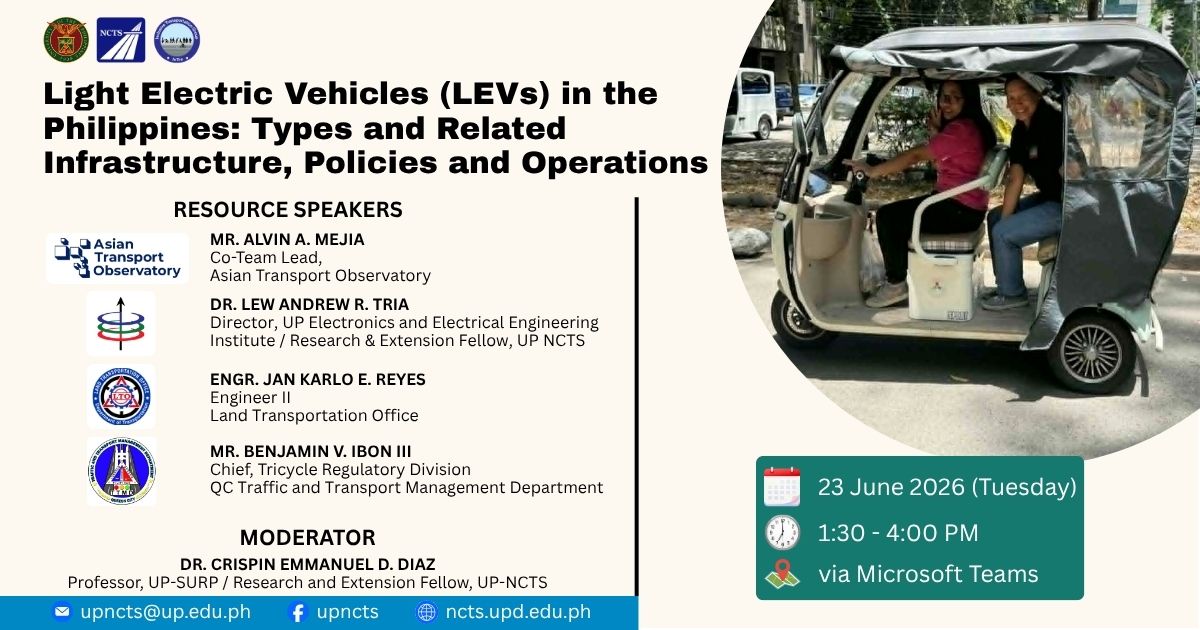
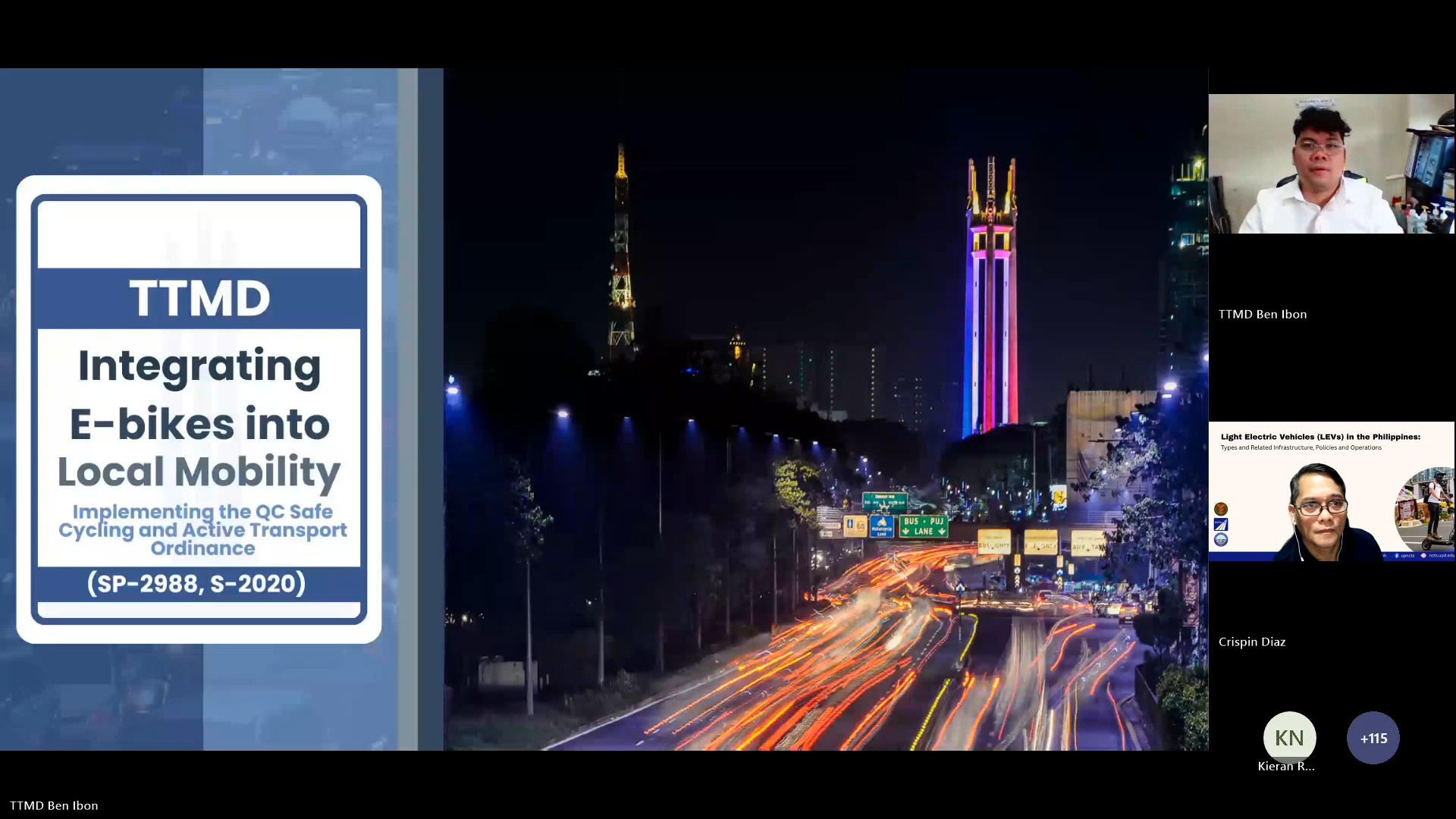
The National Center for Transportation Studies (NCTS) conducted a webinar on Light Electric Vehicles (LEVs) through its Inclusive Transportation (InTra) Group last 23 June 2026. The event brought together participants from academia, government, industry, and the public to explore the growing role of LEVs in the Philippine transport landscape.
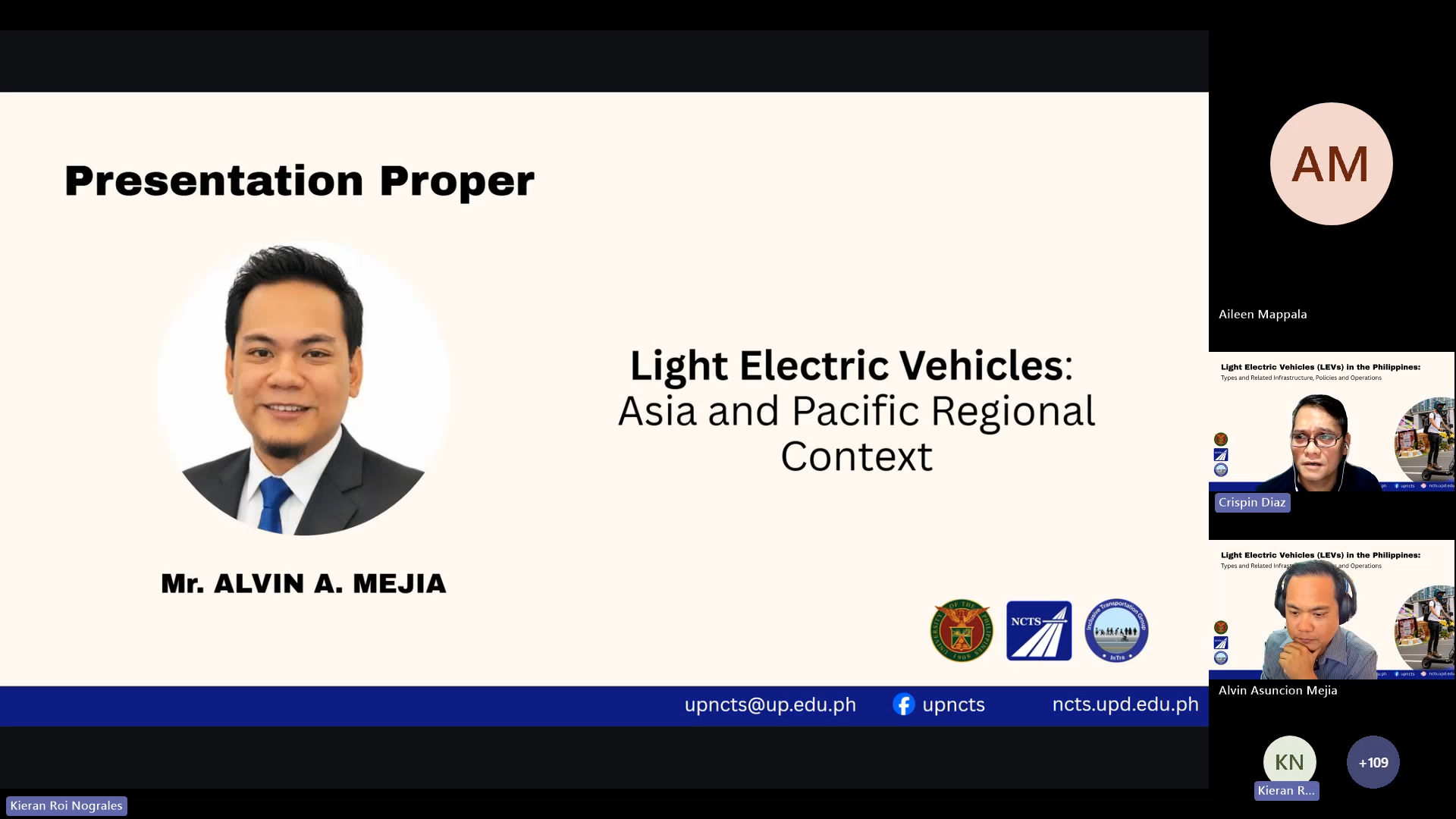
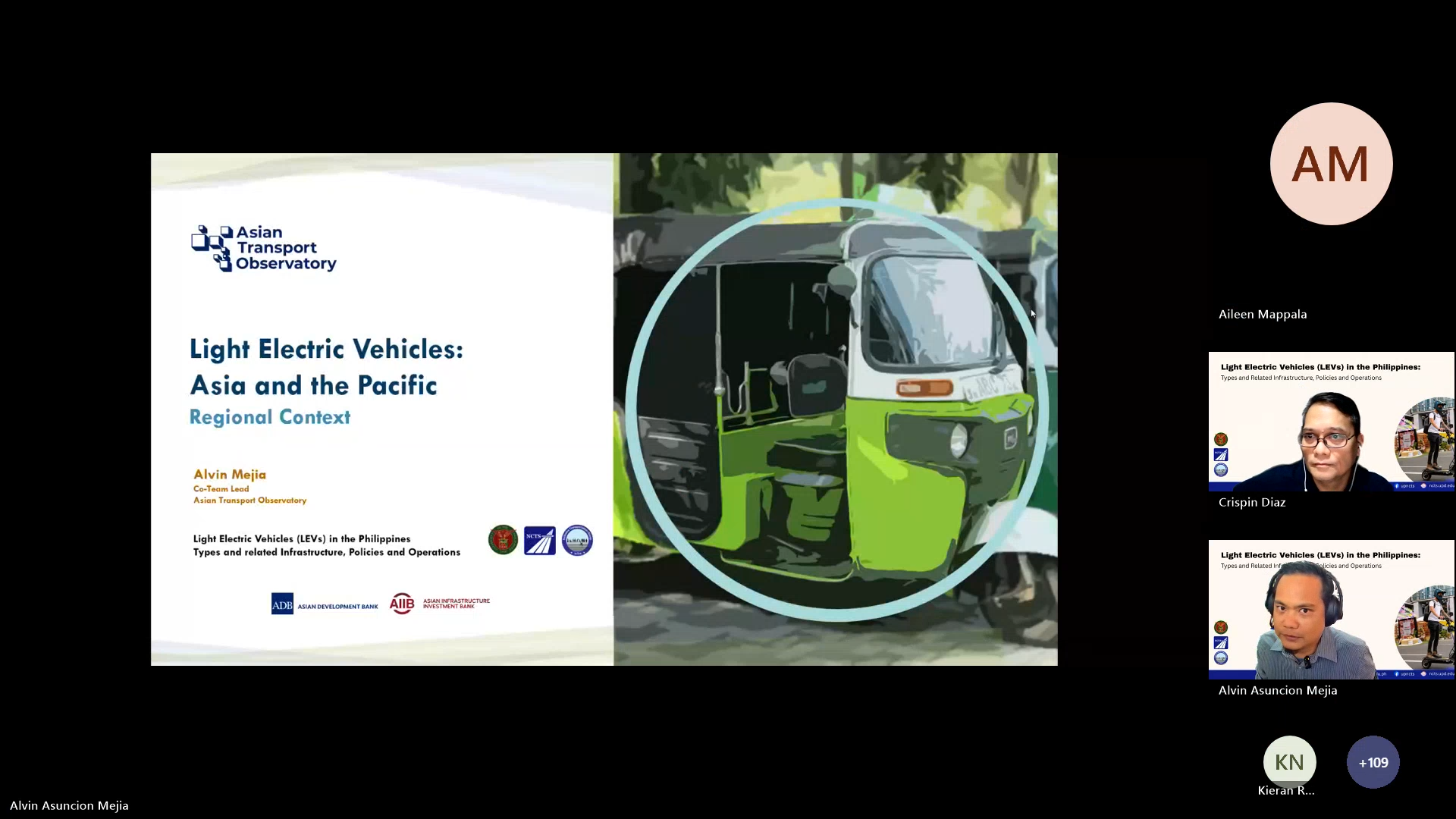
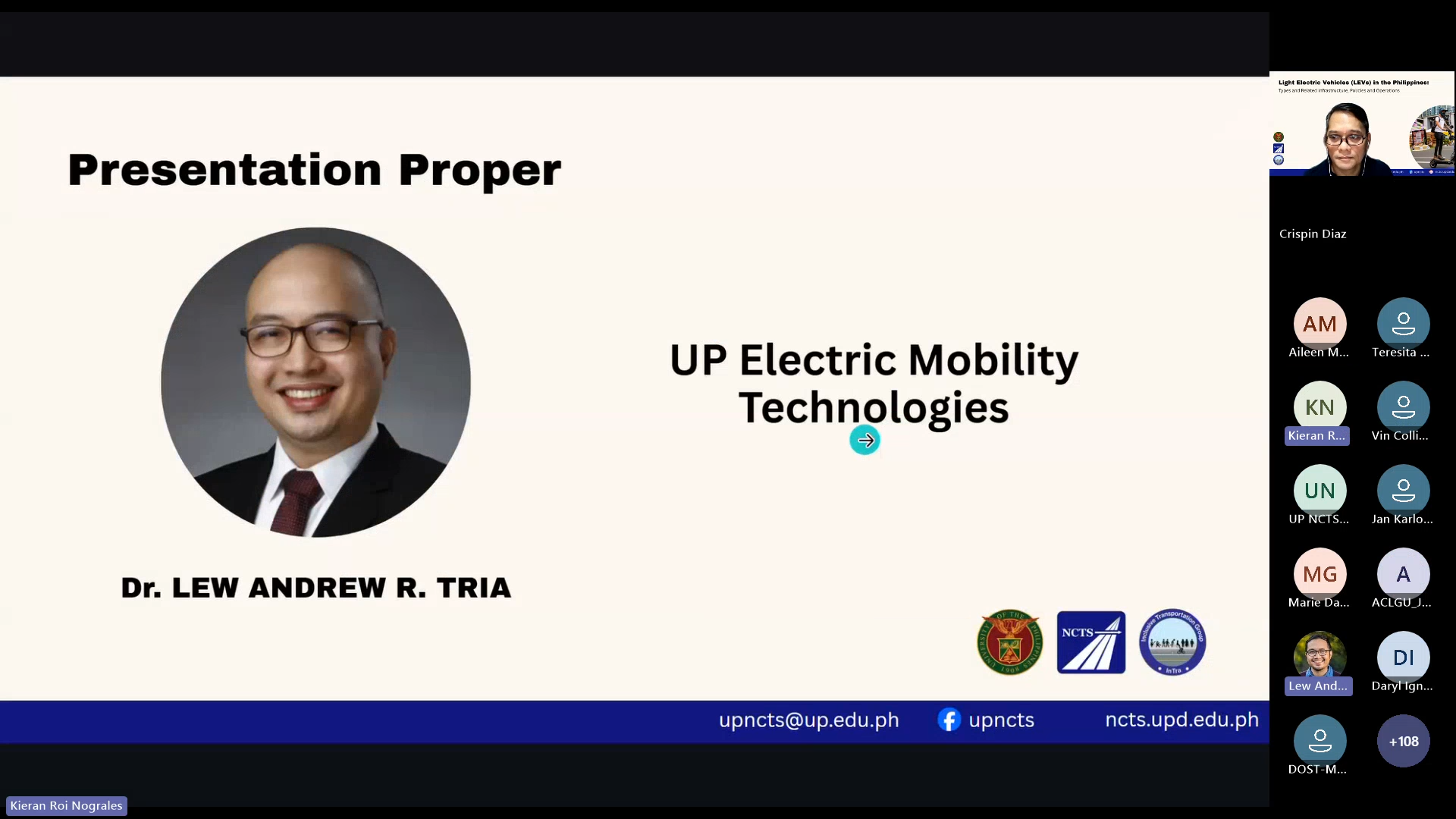
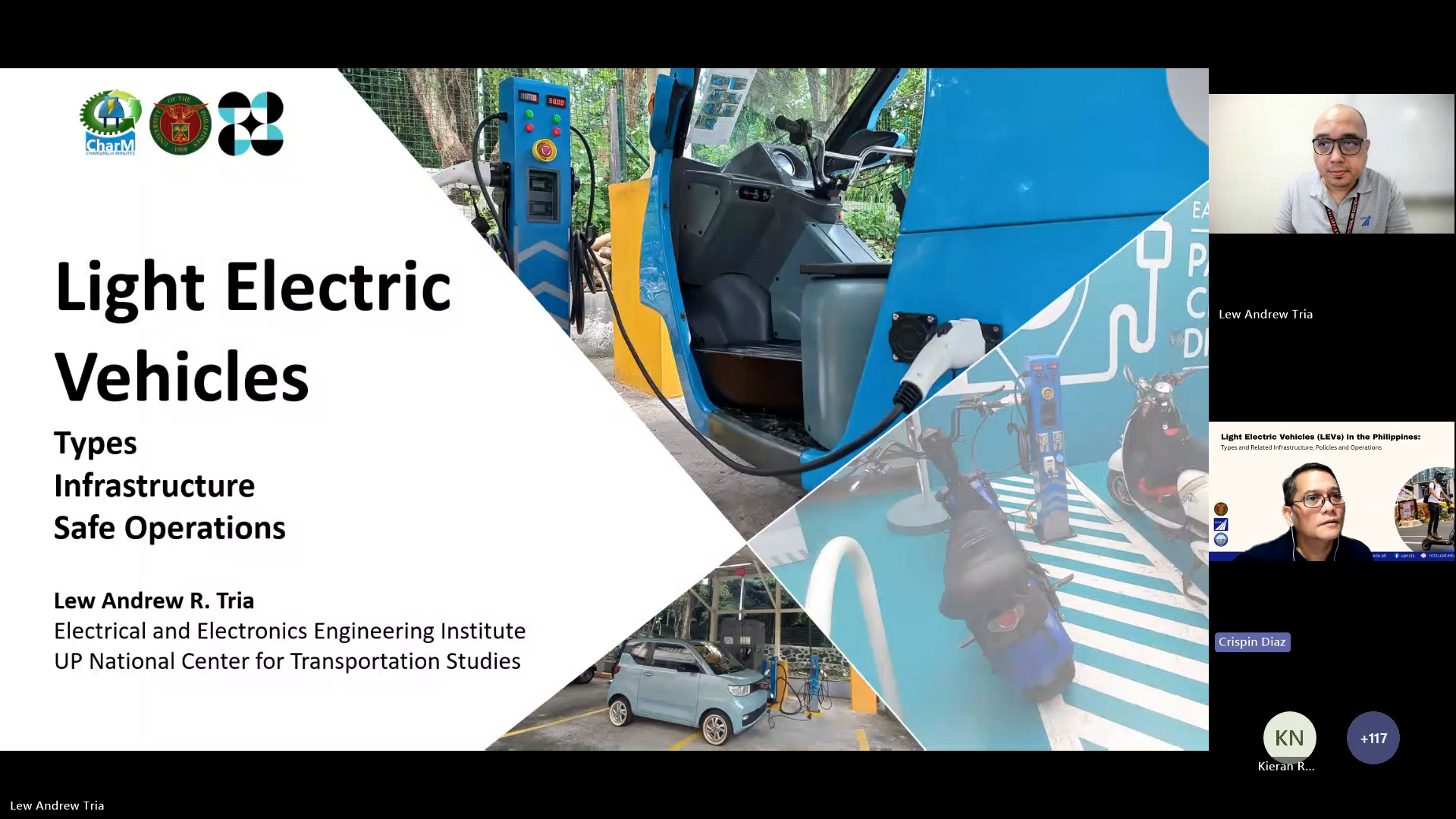
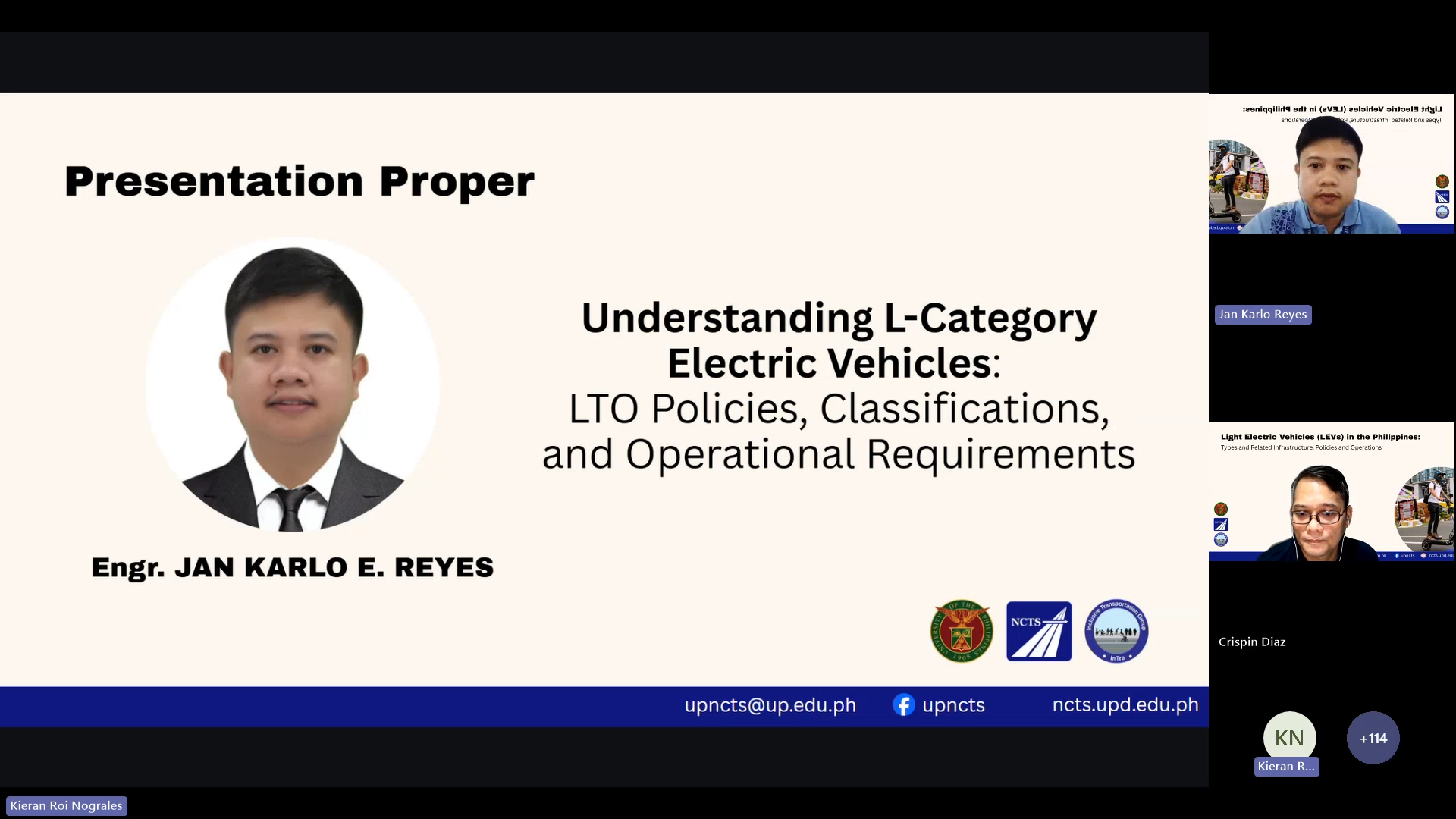
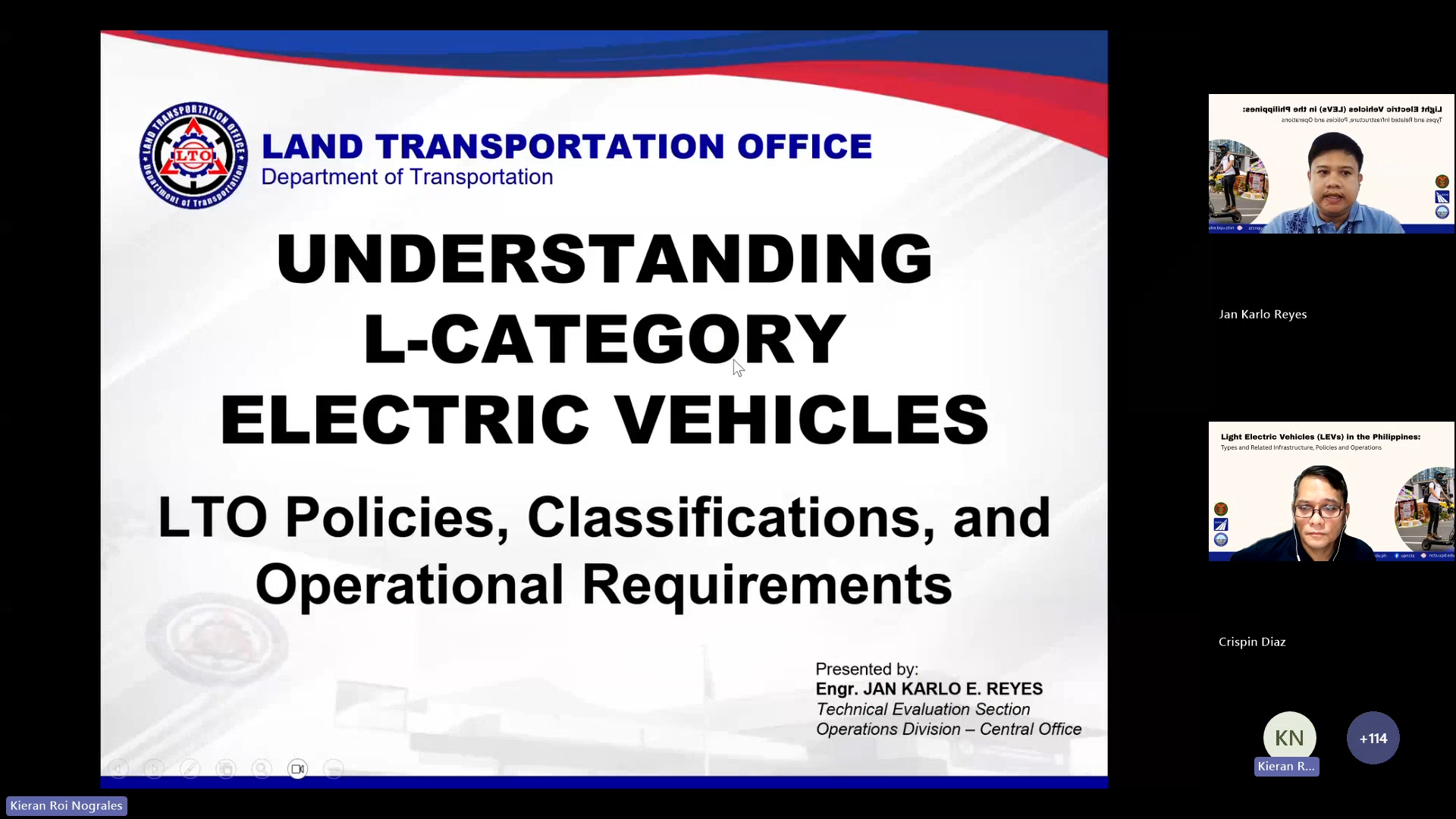
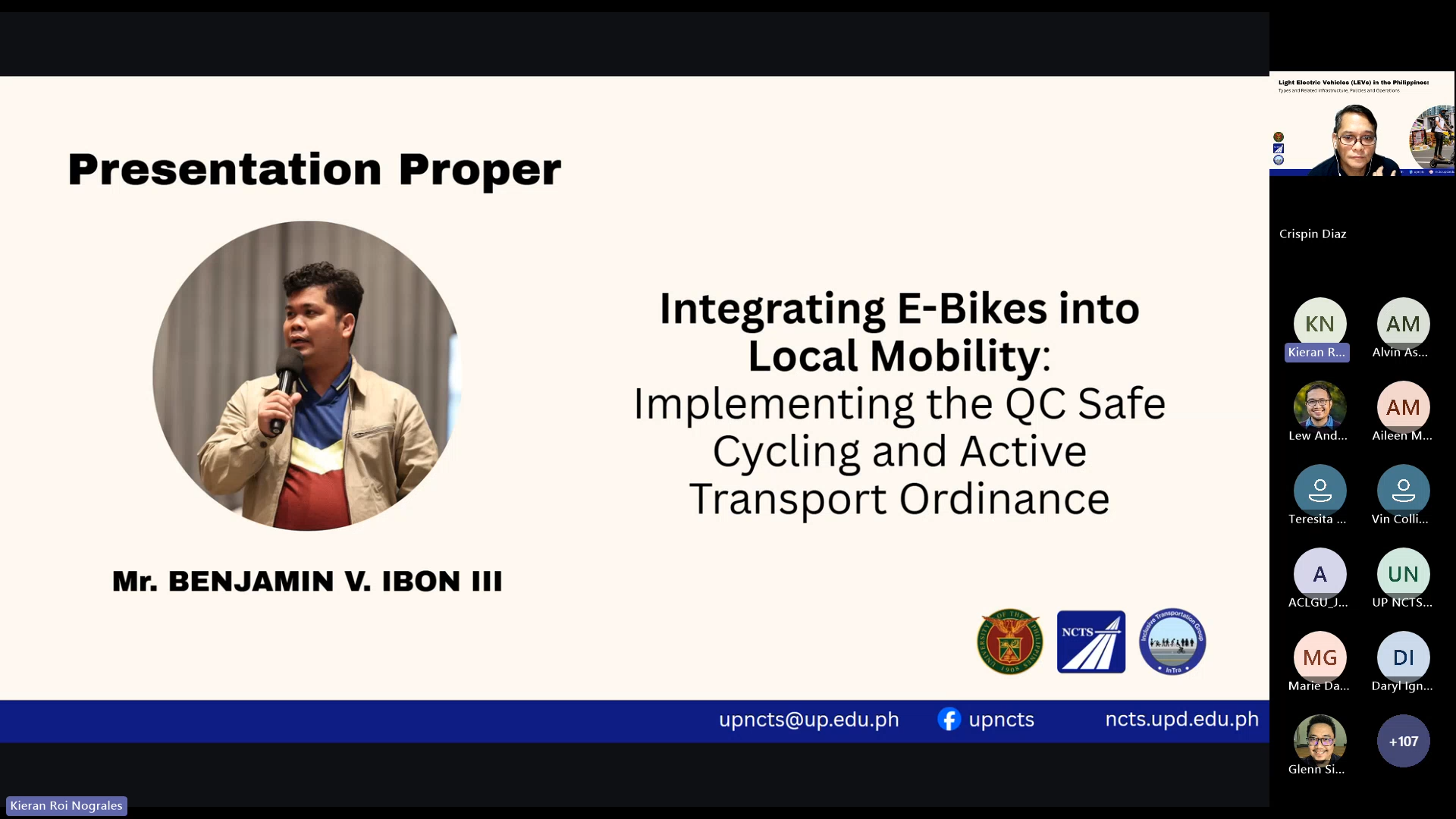
The first speaker was Mr. Alvin A. Mejia of the Asian Transport Observatory, who situated the conversation within the broader regional context, reminding us that the transition toward light electric vehicles is part of a larger movement toward sustainable and low-carbon mobility across Asia. This was followed by Dr. Lew Andrew R. Tria of the Electrical and Electronics Engineering Institute of the University of the Philippines Diliman who showcased exciting developments in electric mobility technologies from the academe. Meanwhile, Engr. Jan Karlo E. Reyes from the LTO Central Office provided much-needed clarity on the definition and classification of light electric vehicles. He explained that these include electric scooters, electric bicycles, electric personal transport devices, and other similar vehicles weighing less than 50 kilograms, as well as L-category vehicles under PNS 1891:2018. His presentation highlighted the importance of clear standards and regulations in ensuring that innovation progresses alongside safety and accountability. On the other hand, from the local government, Mr. Benjamin V. Ibon III of the Quezon City Traffic and Transportation Management Department shared valuable experiences in operating, managing and planning for transition to e-trikes. His insights demonstrated that successful implementation requires not only technology, but also supportive policies, infrastructure, and effective governance.
After the presentations, an open forum was convened, providing an opportunity for participants to actively interact with the resource speakers.
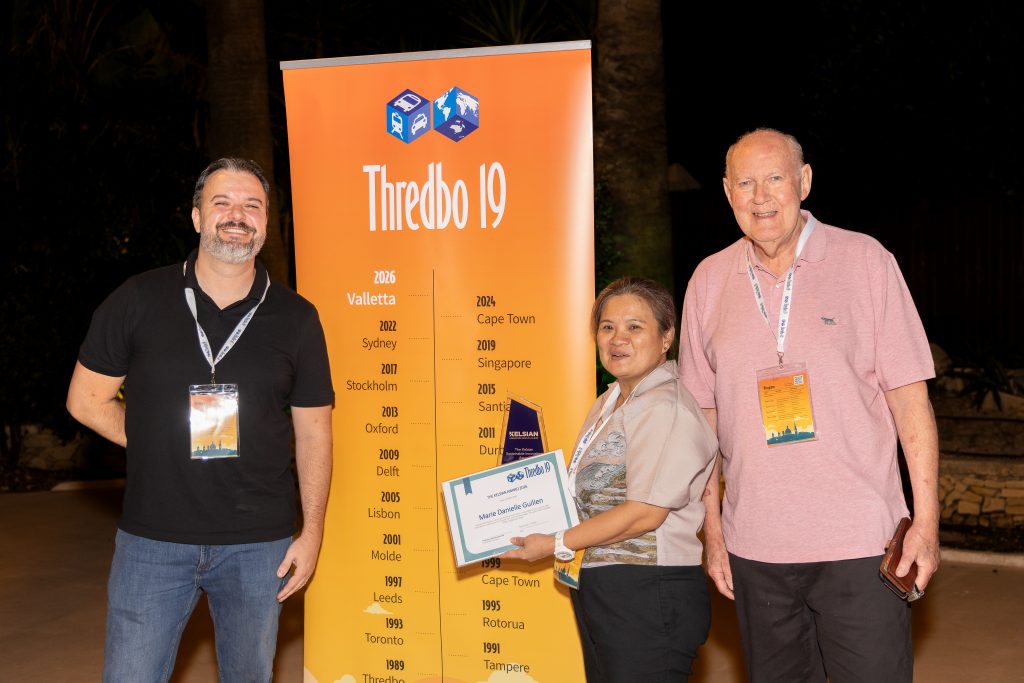
The webinar ended with the synthesis and the closing remarks given by new head of the InTra Group, Dr. Marie Danielle V. Guillen. She said that ‘the most important realization from the webinar is that the future of light electric vehicles goes beyond simply replacing conventional engines with electric ones. It requires an ecosystem—one that integrates technology, infrastructure, regulation, energy systems, and responsible user behavior. It calls for collaboration among government agencies, local governments, academia, industry, and communities. In other words, sustainable mobility is not merely about vehicles; it is about creating a transport system that is safe, inclusive, efficient, and environmentally responsible.”
The Center extends its sincere appreciation to the 160 participants and to all the speakers whose insights made the webinar a meaningful and engaging exchange of ideas.
The InTra Group is very grateful to NCTS Research and Extension Fellow Dr. Crispin Emmanuel D. Diaz who served as the moderator; interns from the College of Engineering-Institute of Civil Engineering, Mr. Kieran Nograles, Mr. Yuri Pantillo and Mr. Vin Reyes; as well as to the other groups of NCTS: Training, Traffic Engineering and Management (TEM), and Transportation, Environment, and Energy (TE&E) for the support provided for the conduct of this webinar.