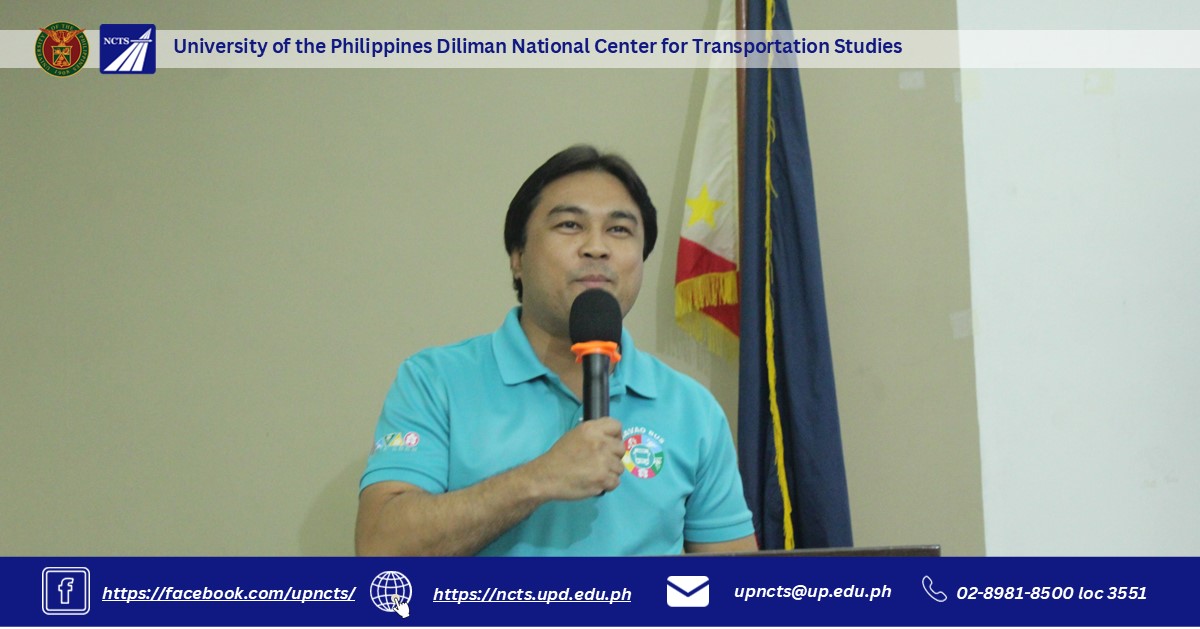
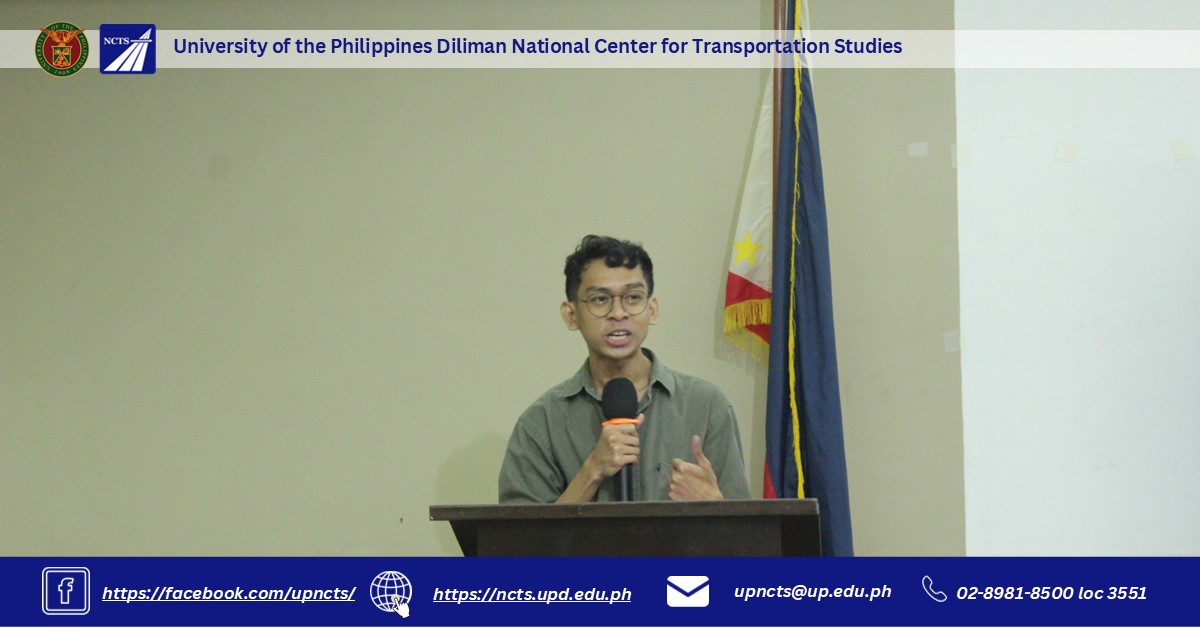
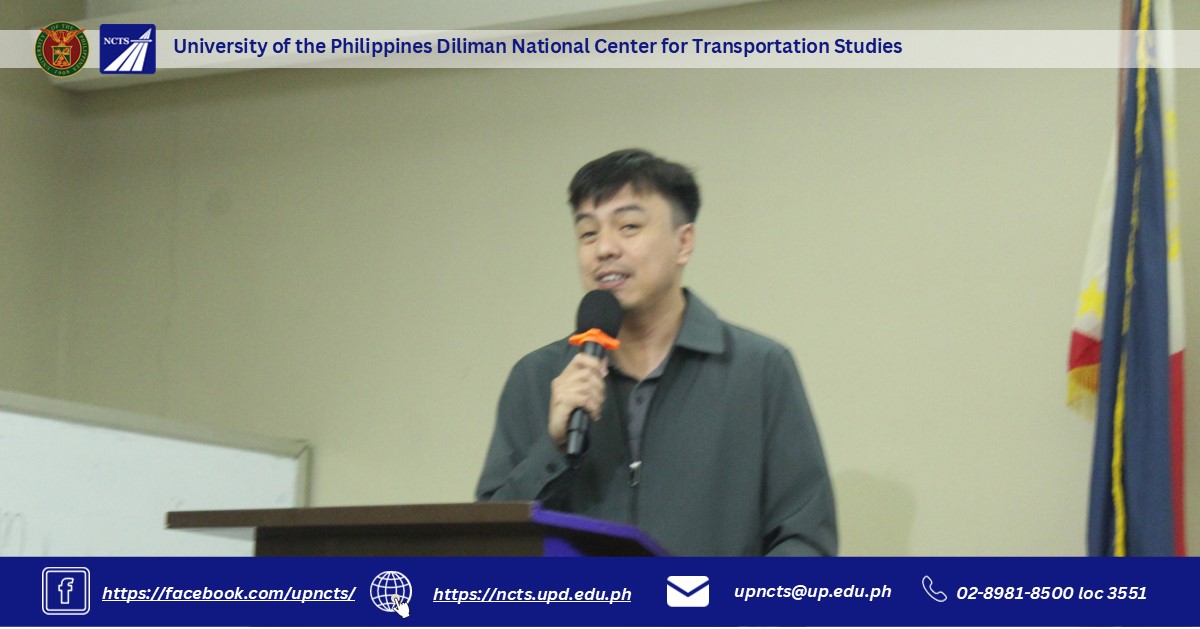
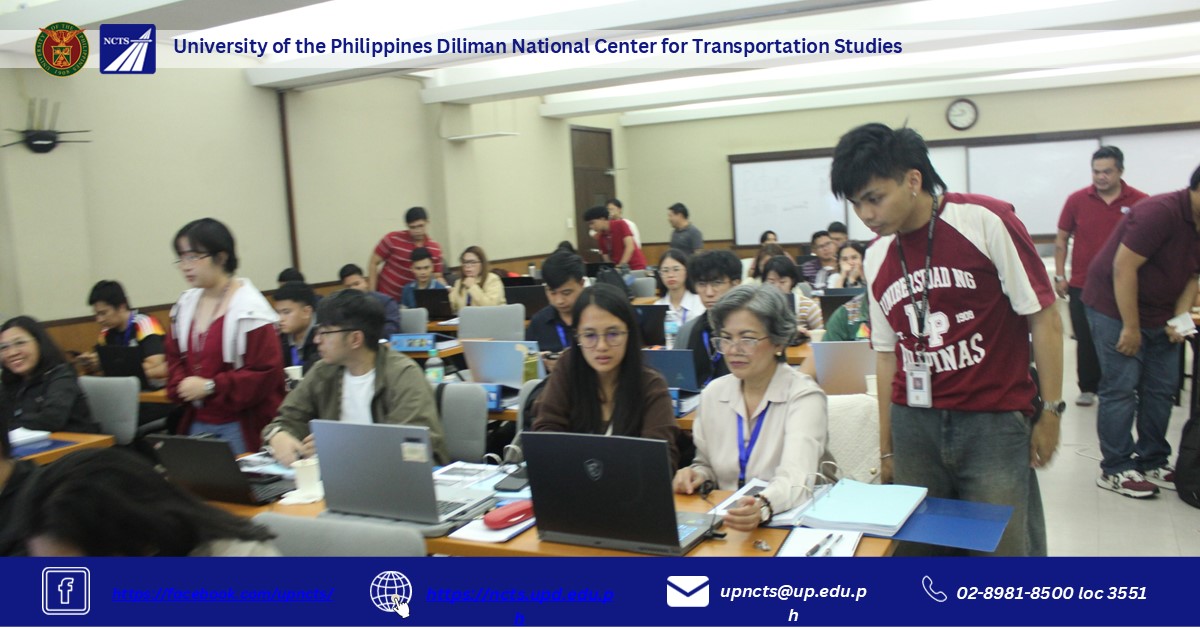
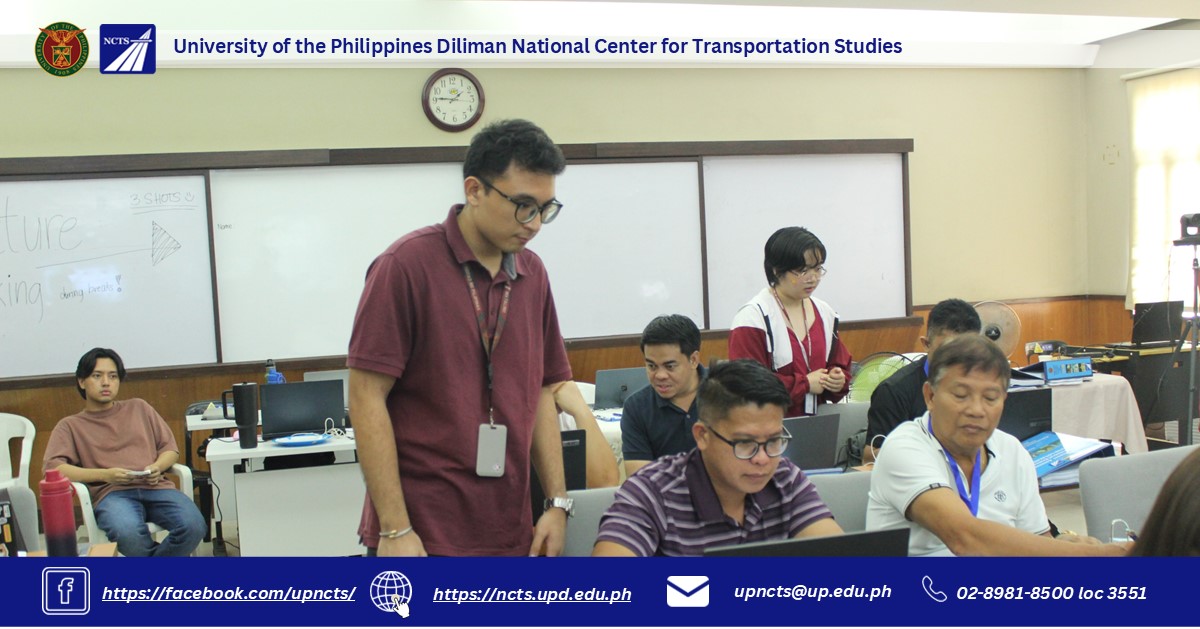
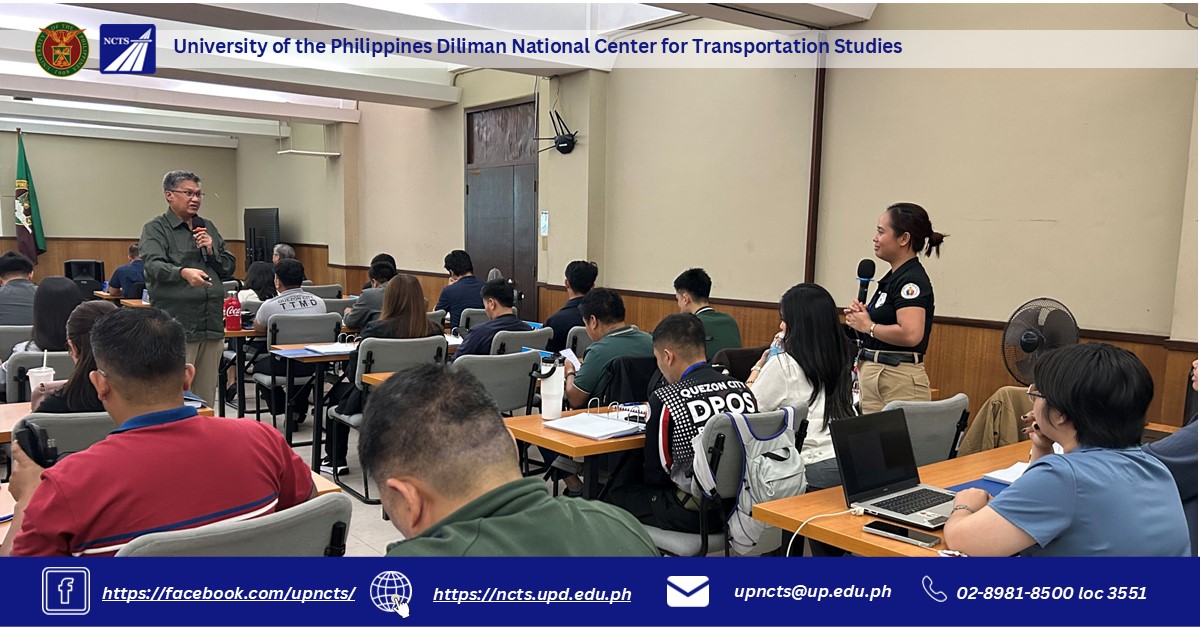
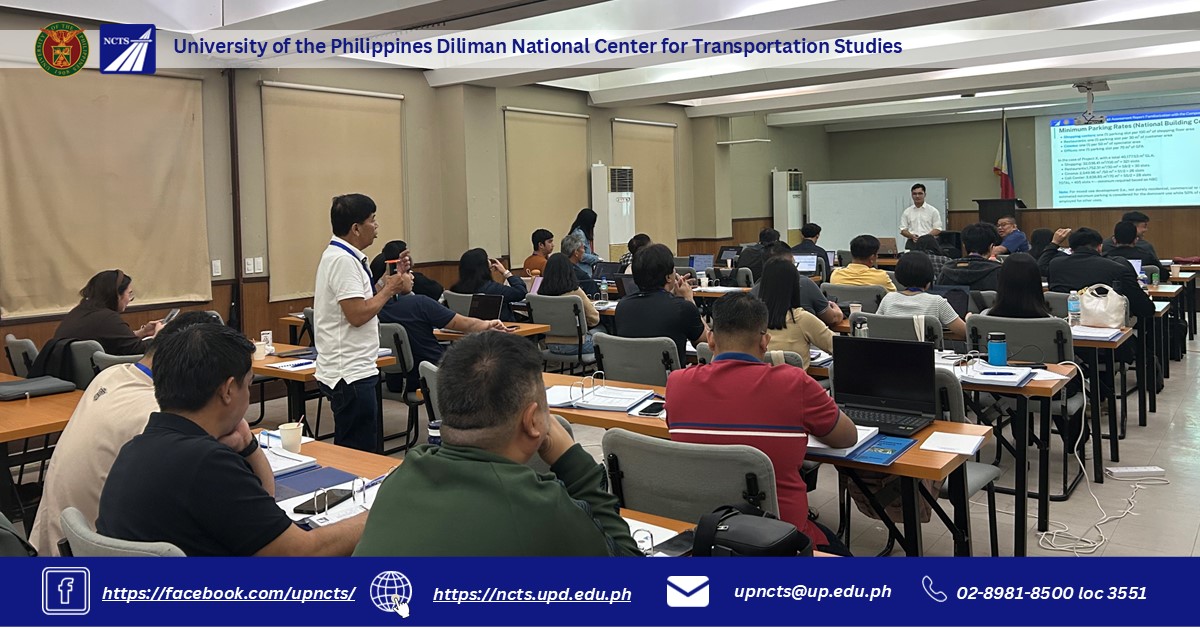
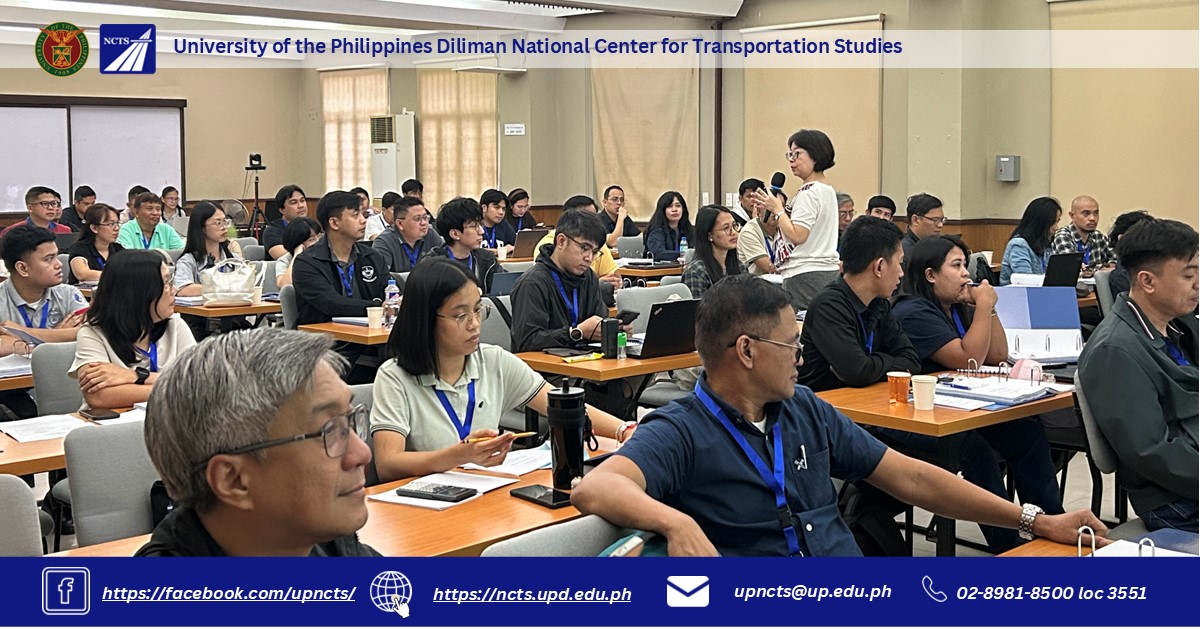
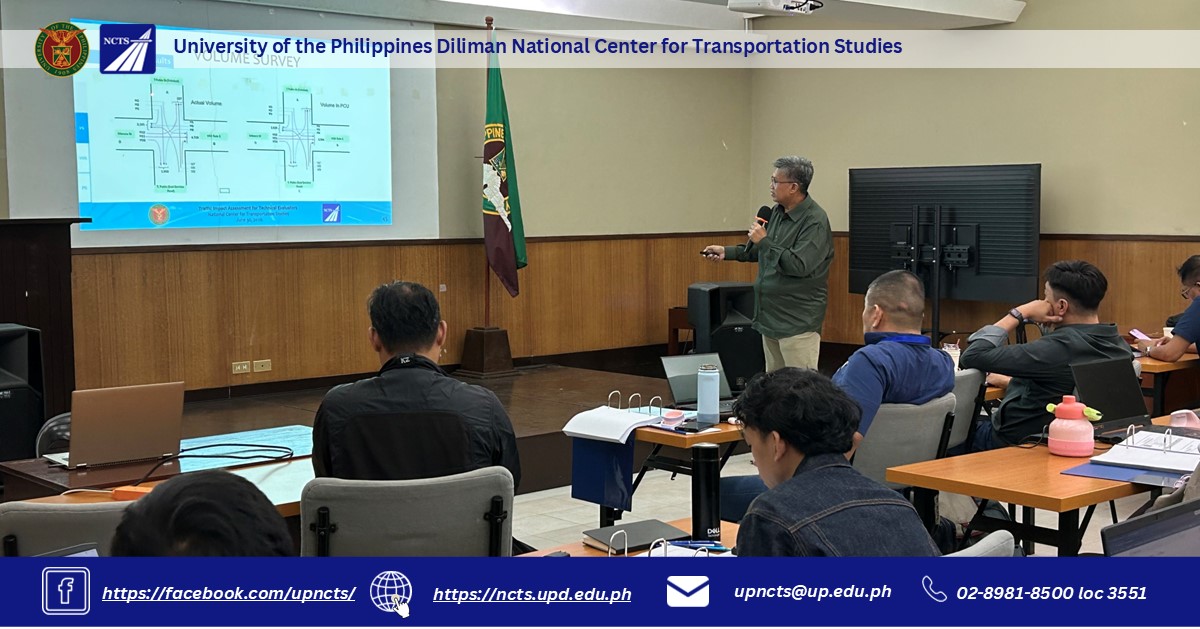
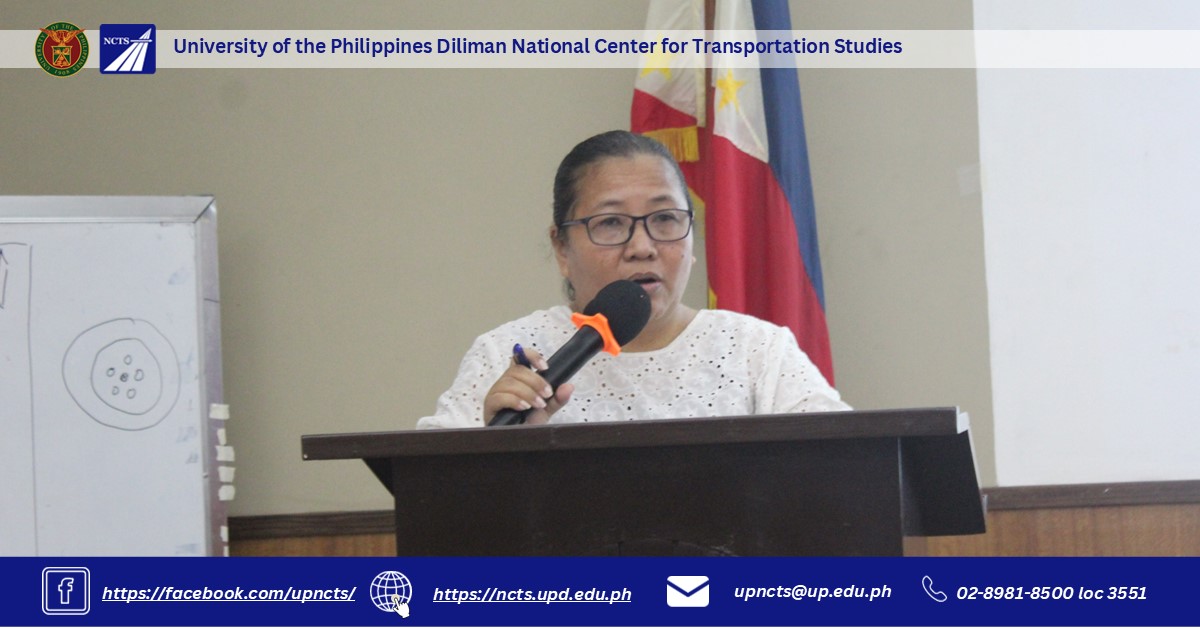
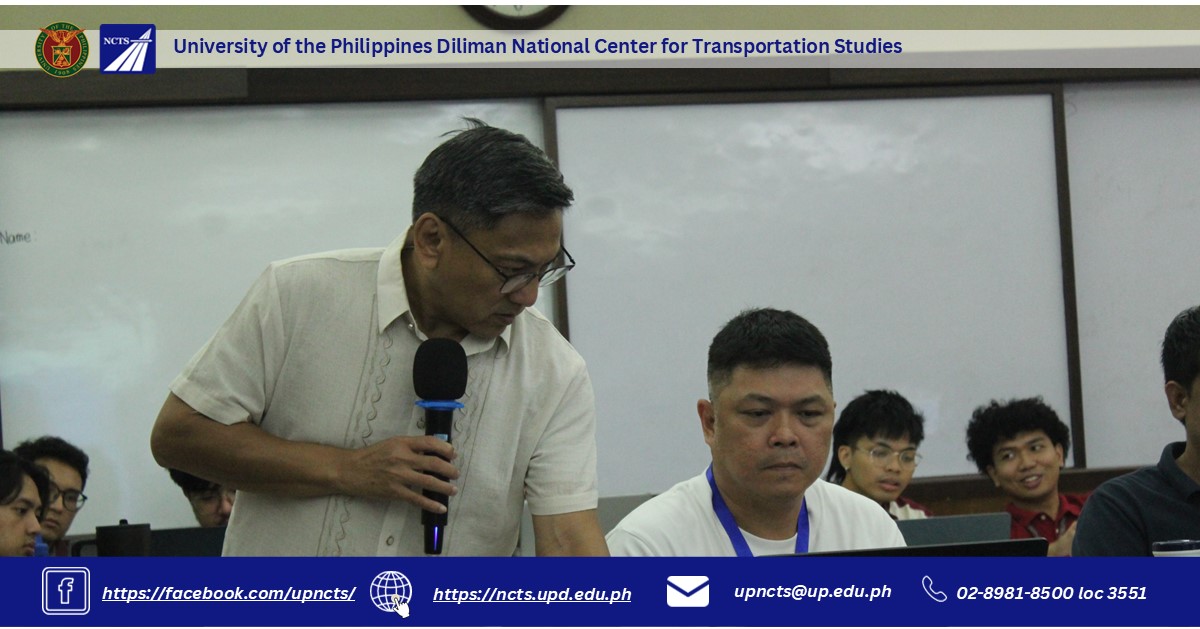
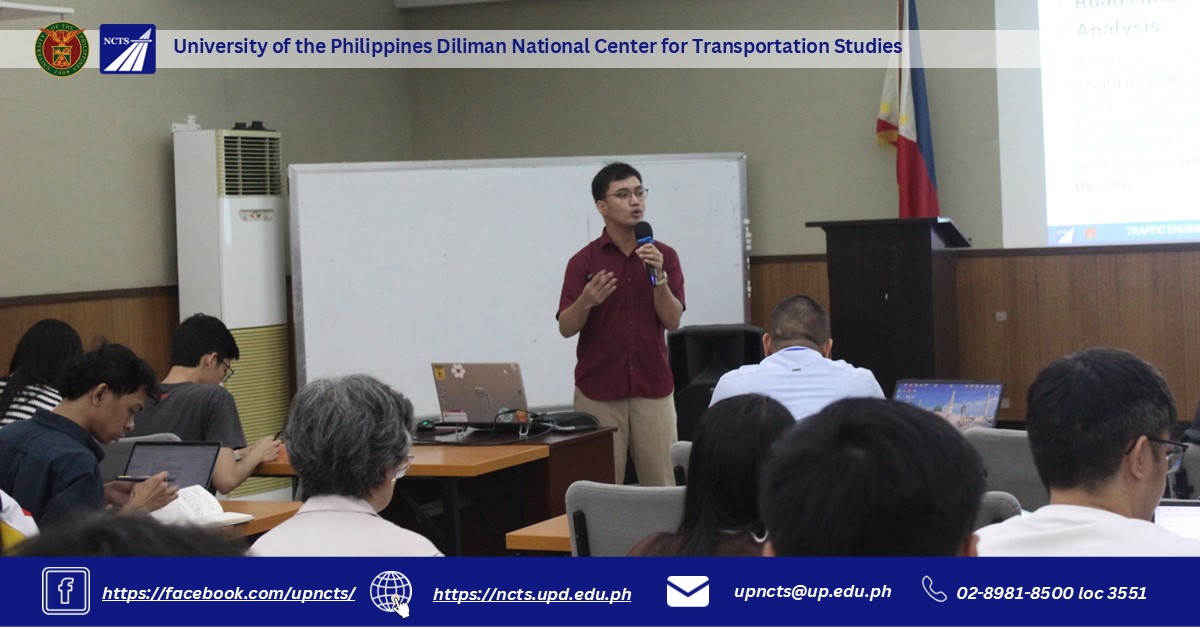
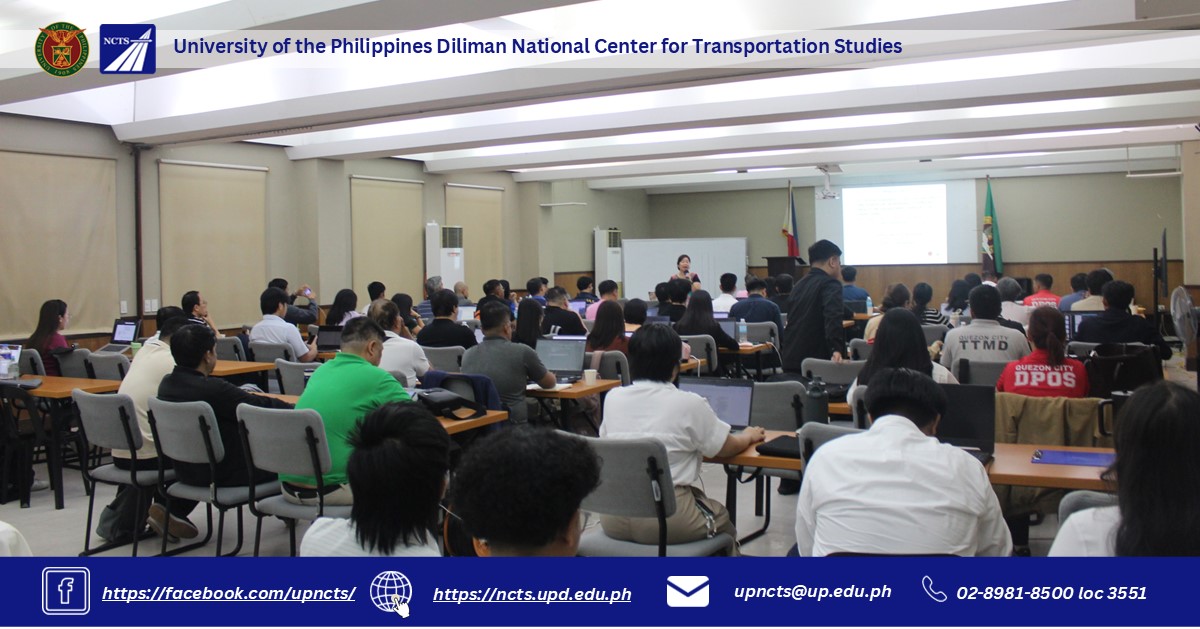
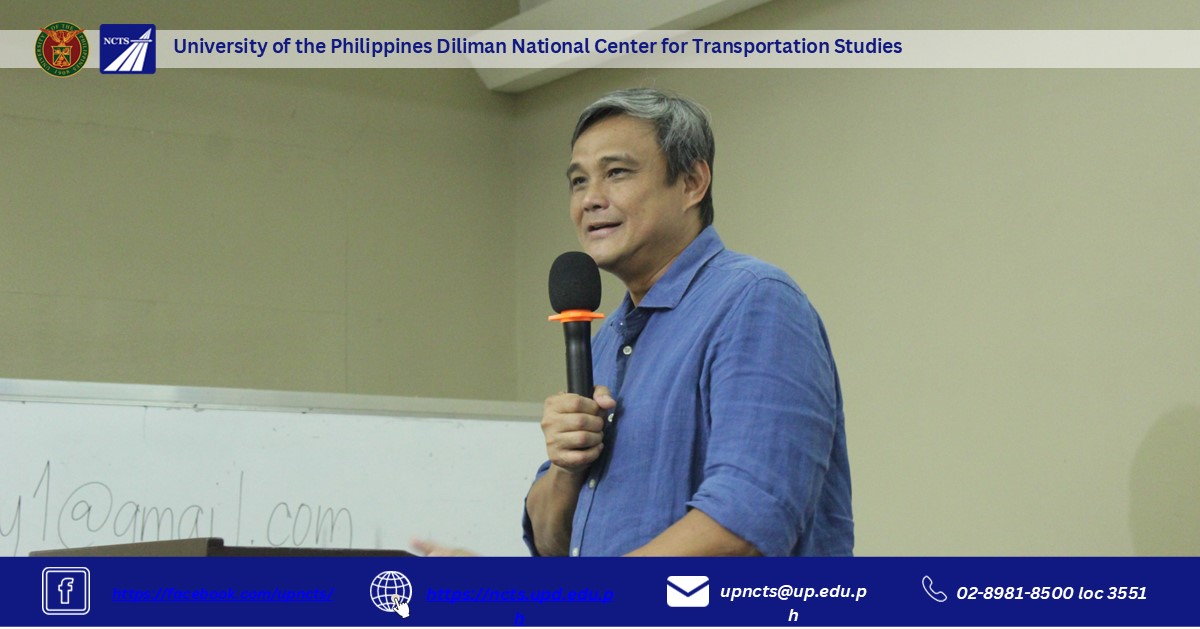
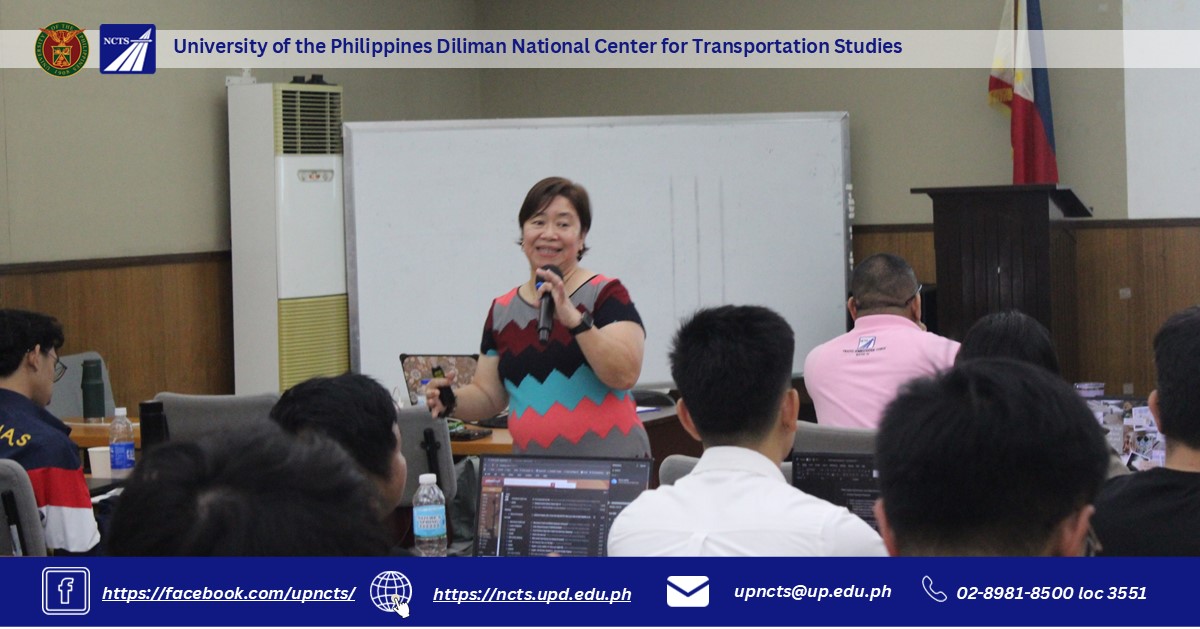
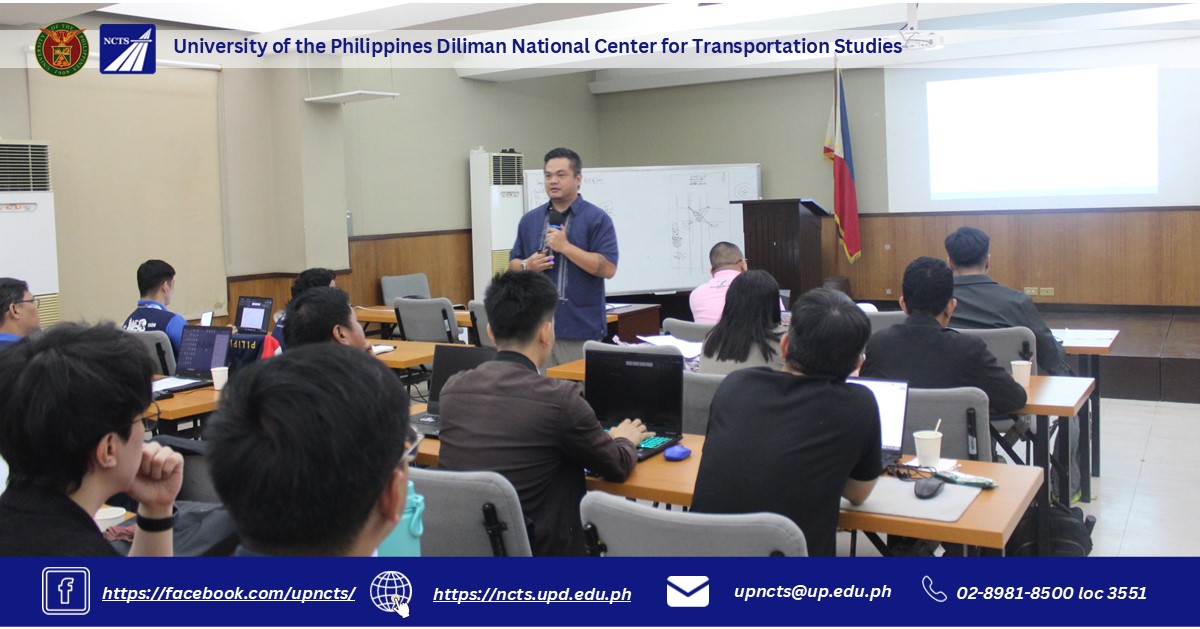
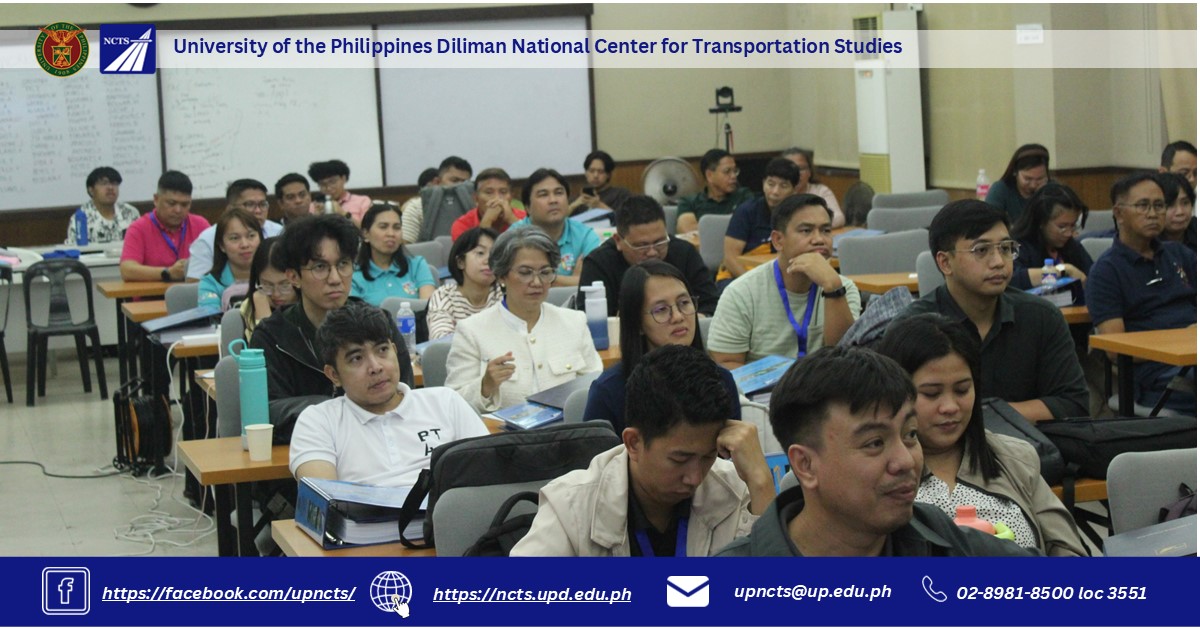
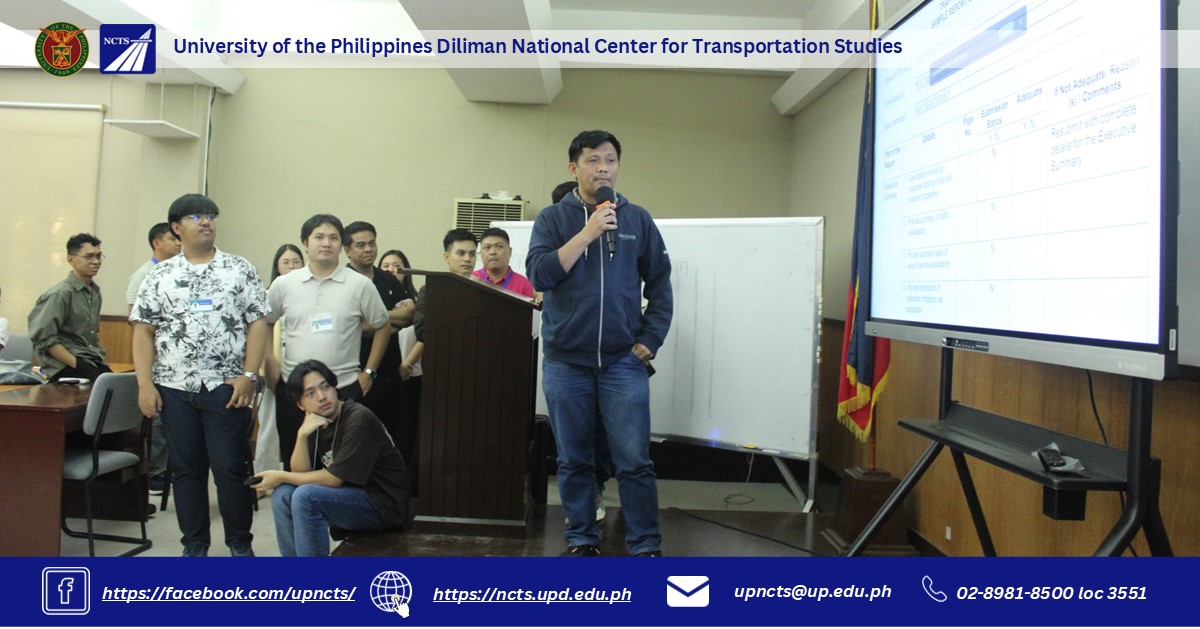
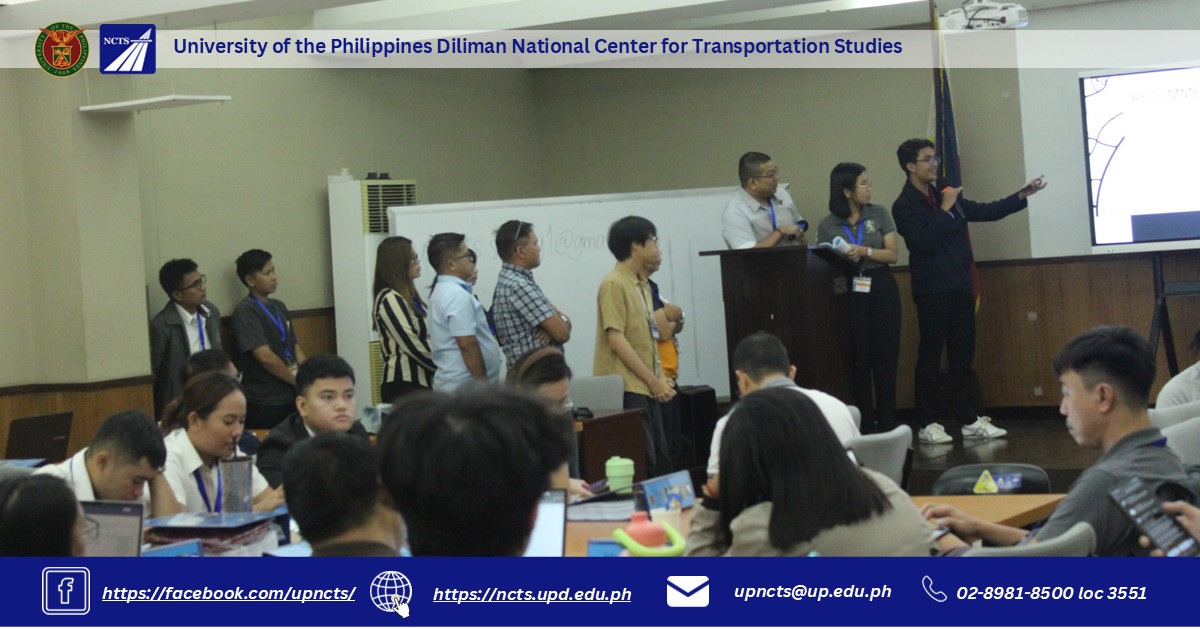
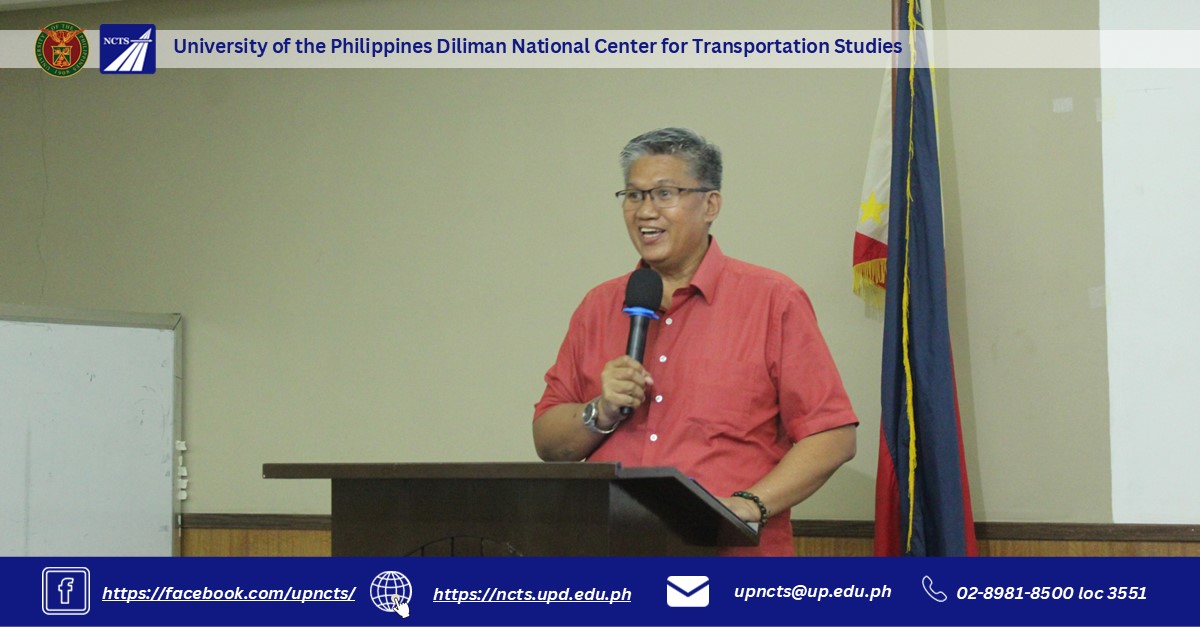
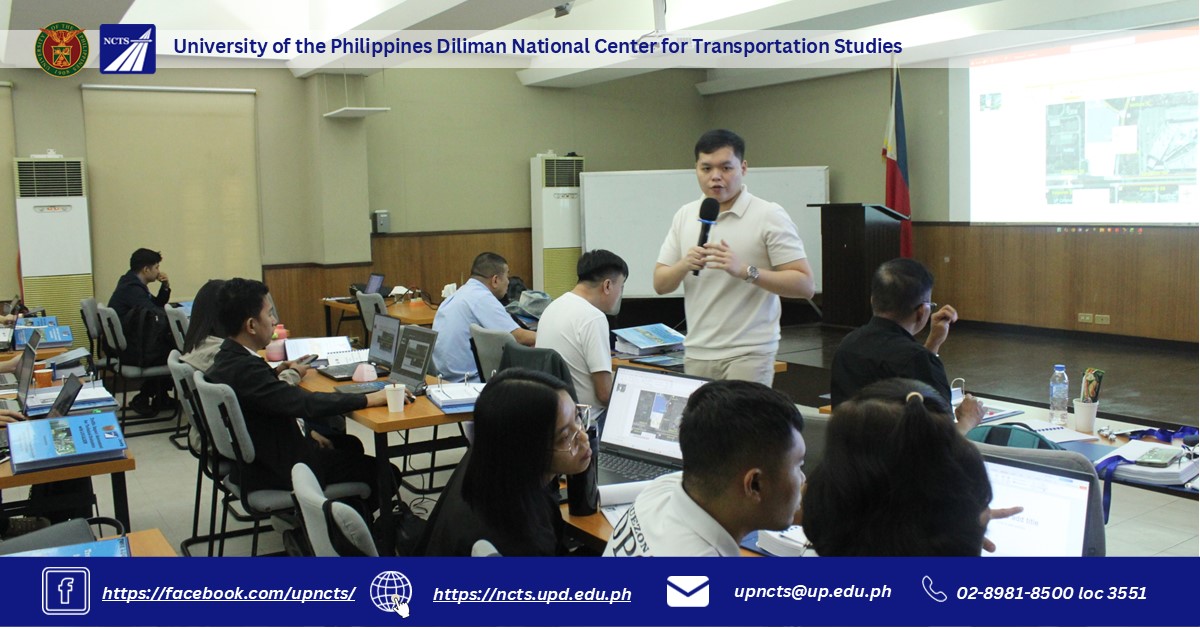
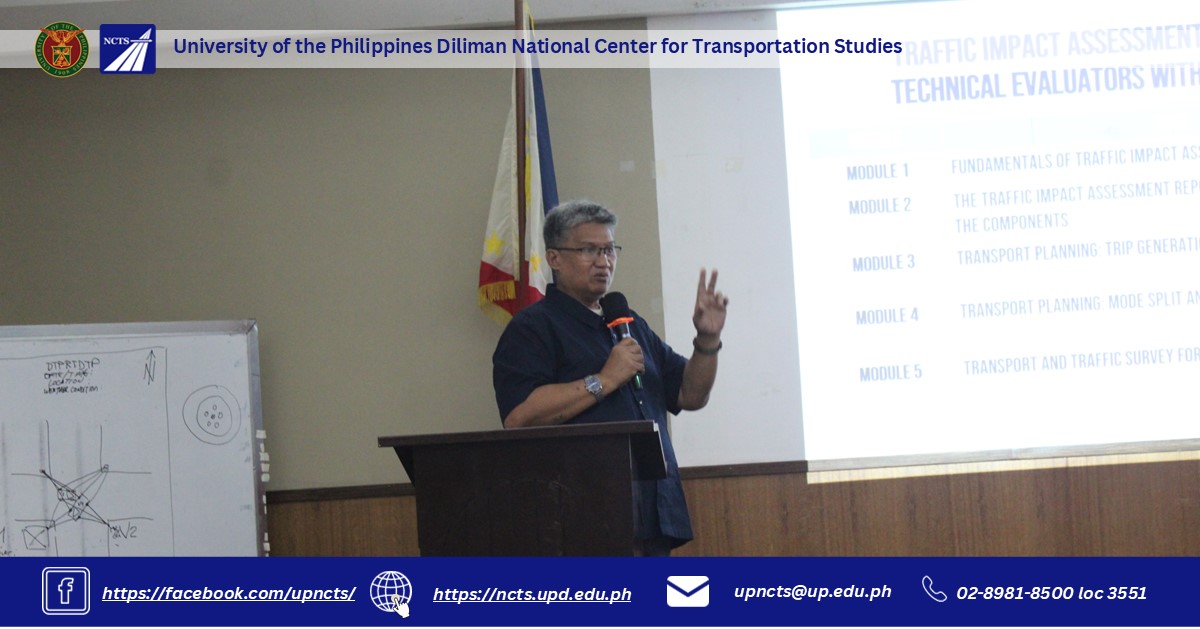
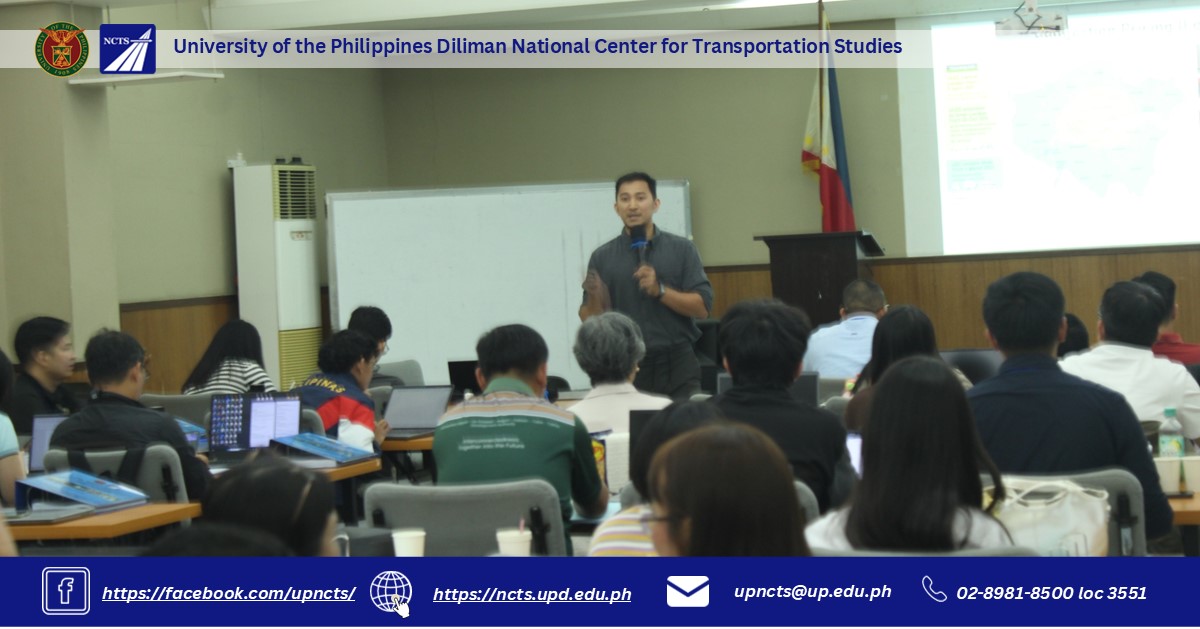
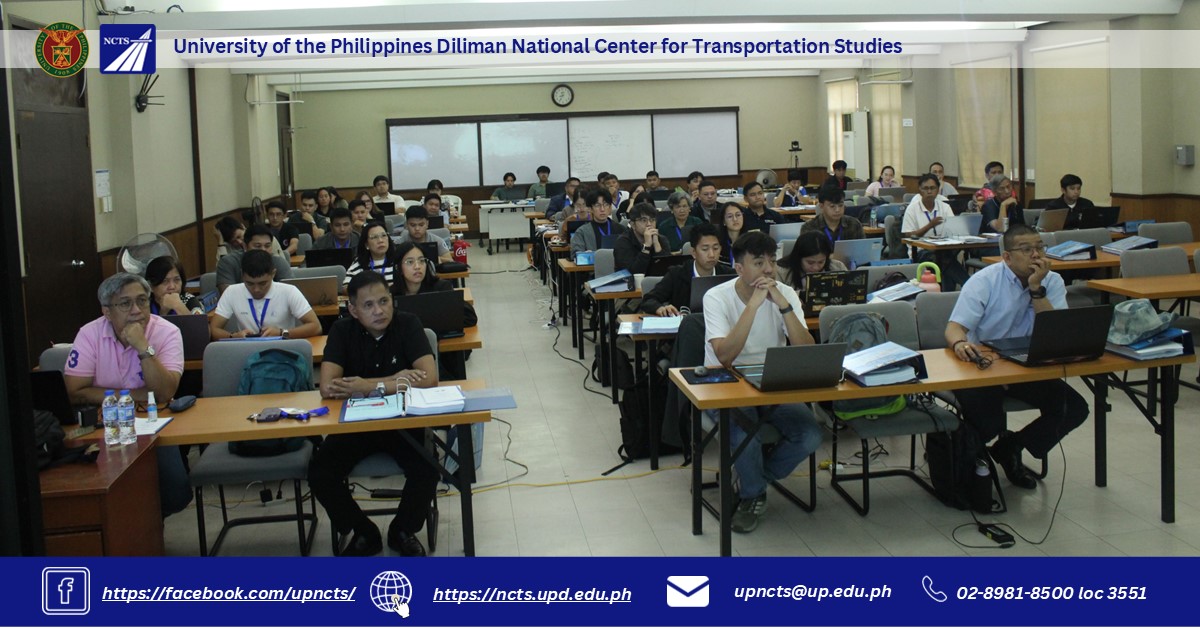
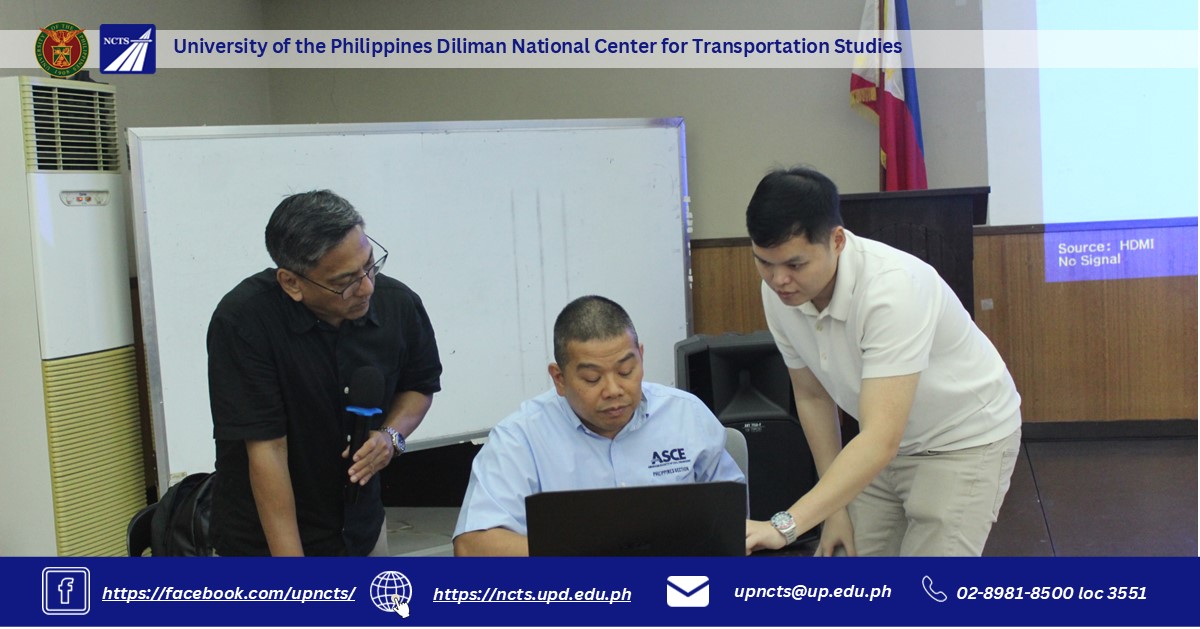
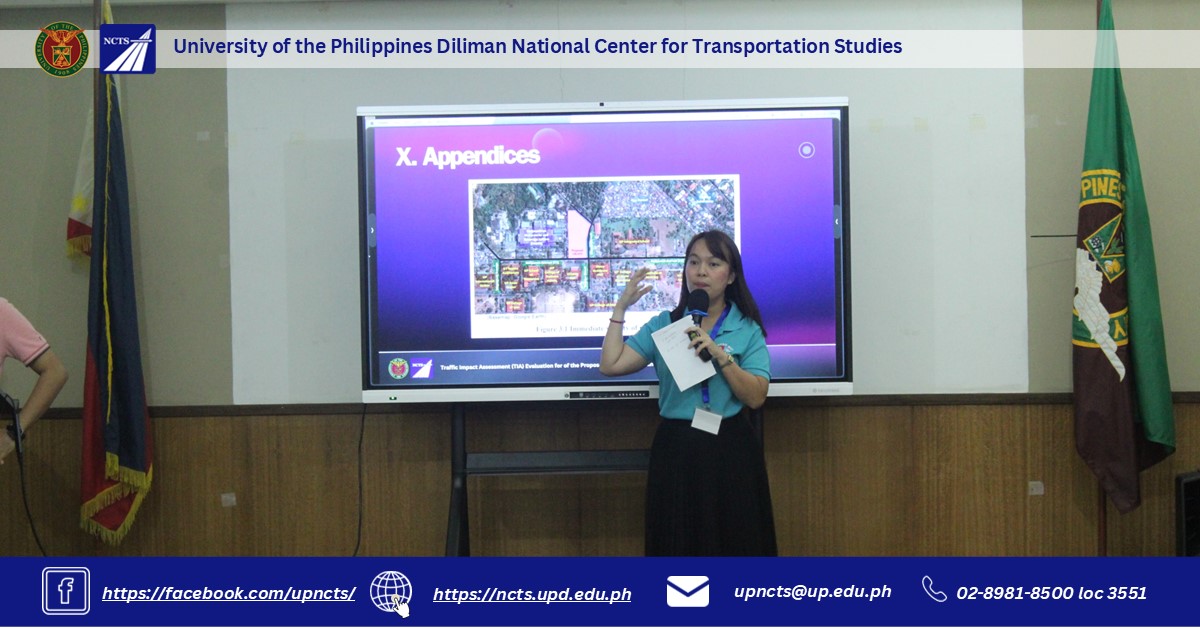
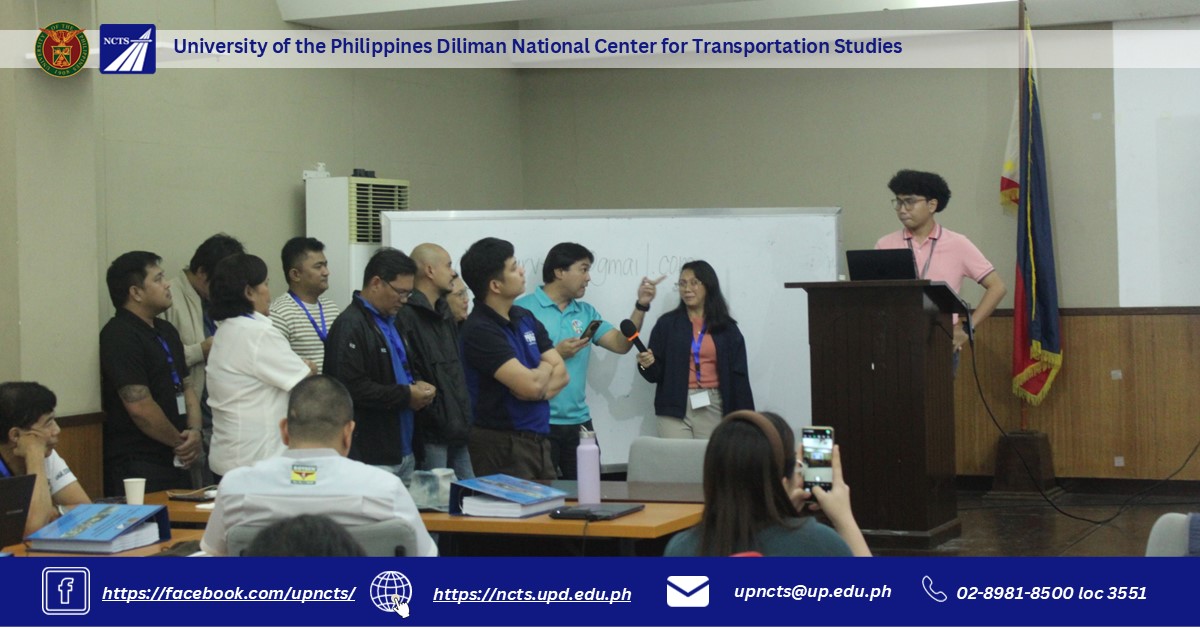
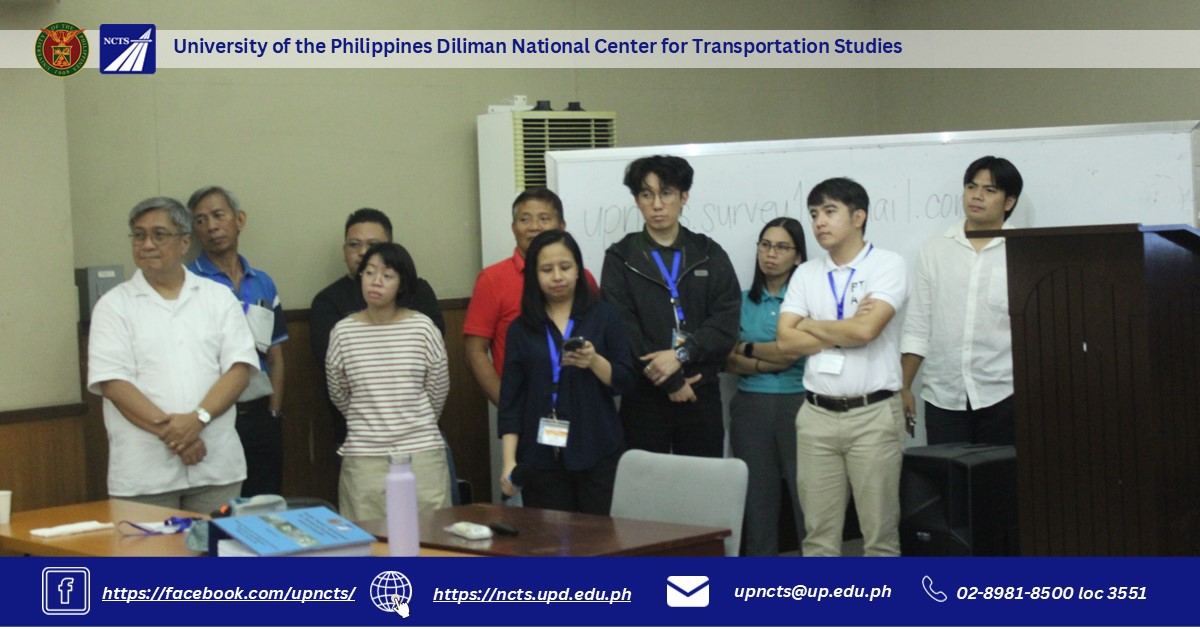
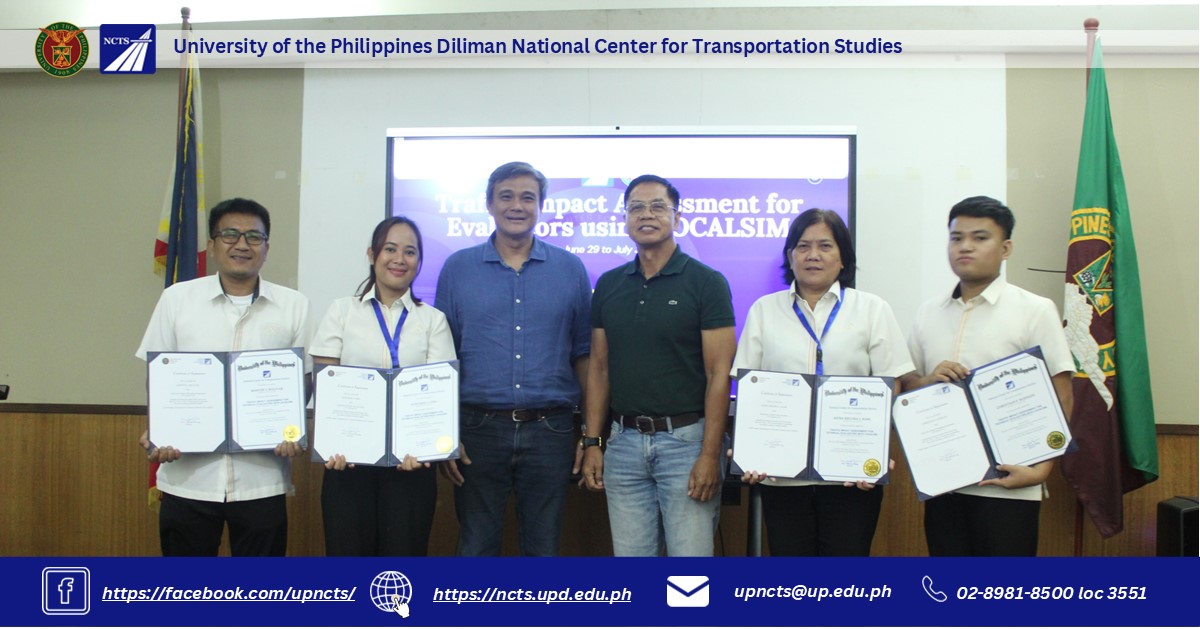
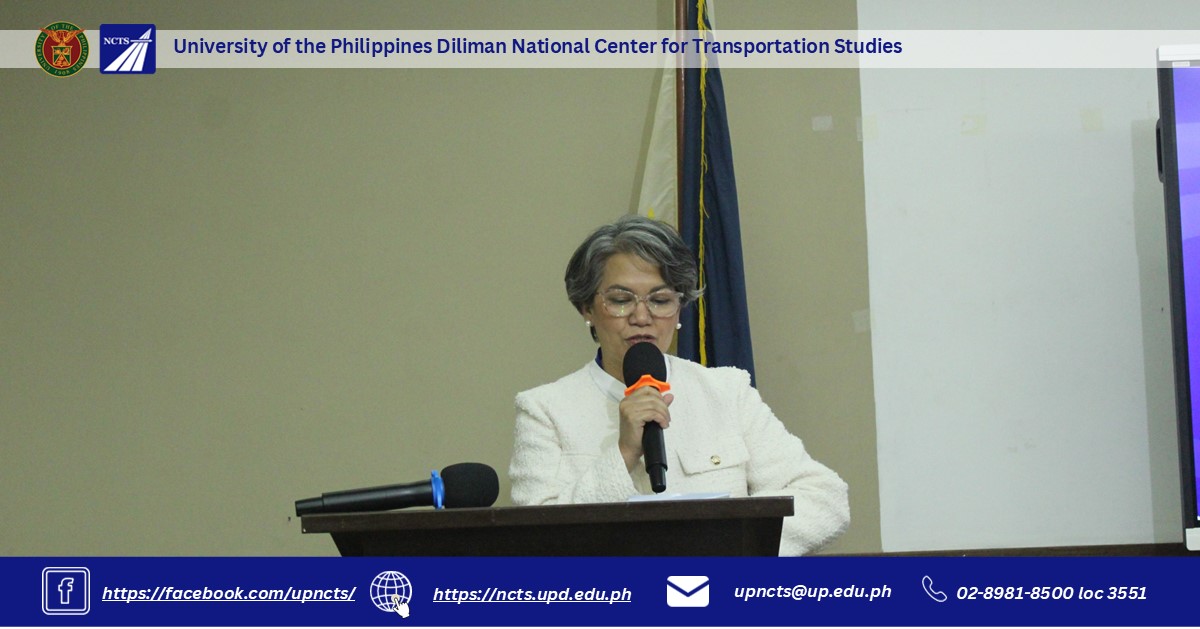
The University of the Philippines National Center for Transportation Studies (UP NCTS) conducted the Traffic Impact Assessment for Technical Evaluators Training Program from 29 June to 3 July 2026. The five-day training program was designed to enhance the capacity of technical evaluators in the review and assessment of Traffic Impact Assessment (TIA) studies for proposed developments.
The training emphasized the role of TIA as a planning and evaluation tool that supports evidence-based decision-making in transport and land use development. The sessions covered key principles, procedures, and technical considerations in assessing traffic impacts, with the broader objective of contributing to safer, more efficient, and more livable communities.
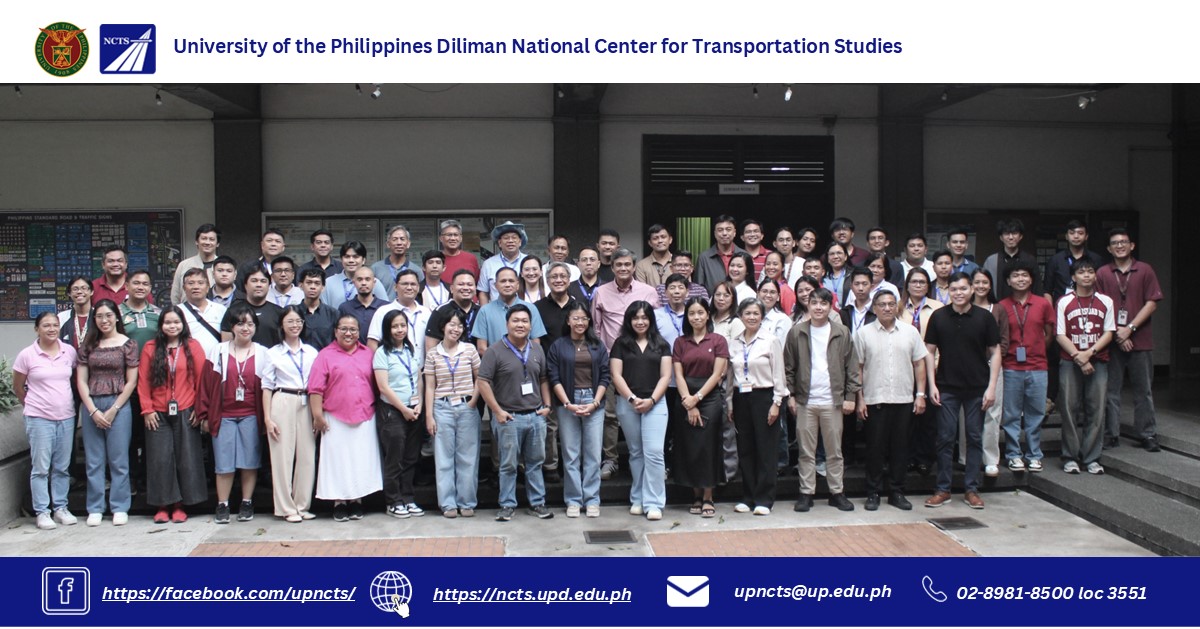
The program was attended by participants from local government units, national government agencies, academic institutions, and private organizations. Represented institutions and localities included Taguig City, Victorias City, Quezon City, the City of Manila, Oroquieta City, the Municipality of General Mariano Alvarez, General Trias City, Davao City, Cebu City, Cagayan de Oro City, Butuan City, the Metropolitan Manila Development Authority, the Metropolitan BLISTT Development Authority, the Department of Transportation, Mapúa University, F.F. Cruz and Co., Inc., Blackgear Environmental Engineering Services, and BT Arquitektos.
As part of the program, participants were provided with the LOCALSIM software, which may be used for traffic microsimulation and intersection analysis. They were also given a sample TIA evaluation checklist and a sample TIA report to serve as reference materials in the technical review of TIA submissions.
The training also served as a venue for participants to exchange experiences and discuss common challenges in evaluating traffic impacts at the local level. Through lectures, discussions, and practical exercises, participants were able to relate technical concepts to actual situations encountered in their respective offices and organizations.
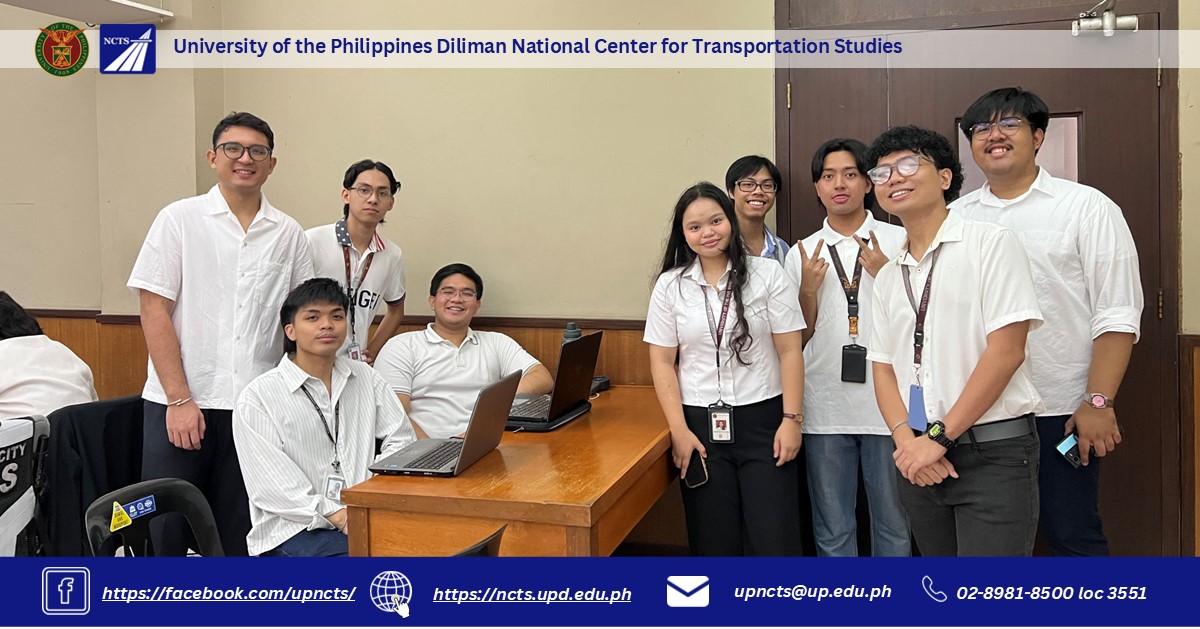
UP NCTS extends its appreciation to the resource persons, facilitators, training team, and the Quezon City Government for their support, particularly General Elmo San Diego and Traffic and Transport Management Department Head Dexter Cardenas. UP NCTS also acknowledges the assistance of the UP Institute of Civil Engineering interns in the administration and implementation of the training program.
Through capacity-building initiatives such as this, UP NCTS continues to support local government units, national agencies, academic institutions, and private sector partners in strengthening transport planning, traffic management, and development review practices in the Philippines.